


Connect with us

Campus

Anime in Our Dorms

Jayda J

Published

on

Megan Thee Stallion's Instagram

Let’s talk about anime. Why? How many people do you know that have anime posters in their dorm? How many people do you know on campus that have a favorite anime? What’s your favorite anime? If you don’t watch it, why don’t you watch it? 

Megan Thee Stallion started wearing her cosplays and all your favorite rappers started calling it cool and now every Black person you know is supposed to watch an anime and get into it. Here’s the thing though…this wasn’t always cool for Black people, but Black people have always been into anime. We are always looking into what the rest of the world is doing because the US tends to make us feel boxed in. And being boxed in by a country that changes its mind by the day whether it likes you or not is awful. Anime comes in many forms but the ones that are the most popular tend to have a protagonist who is the “chosen one” or has emerged from a terrible backstory, and they are sent on a quest to save the day or avenge their oppressor. Can you see why Black folks might be interested in such a story? 

The idea that someone has to go through literal hell to get the righteousness they deserve is extremely cathartic. Long story short, Tanjiro sets out on a mission to heal his now demon sister and become a demon slayer to protect everyone from the pain he’s endured. 

An independent child off to save the day with a noble purpose, that’s already amazing, but the real seller are the incredible fight scenes. A lot of people get into anime for the fight scenes, because they are like no other. Sword choreography, incredible weapons you’ve never seen before, martial arts, magic powers, or anything else you could imagine. One of the most popular anime in the world is just about a pirate, his gang and his goal of becoming king of the pirates. Why do people love this anime? The main character has stretching powers, which creates some of the most unique and incredible fight scenes you’ve ever seen. 

Why do young Black people cling to these kinds of stories and fight scenes? It’s an expression. If you’ve had a hard day, which could mean, not passing a test, getting passed over for a job or an opportunity, experiencing a micro or macro aggression, being misunderstood by your parents, or facing an unrelenting political climate. Once a day, you can put on your favorite anime and watch a protagonist work on their craft, become great and defeat their enemy in a flourish of moves that could leave you breathless. And for those 30 minutes or 2 hours, if you’ve decided to binge for a while, you feel just as triumphant as that protagonist. You also work hard, you are also honing your craft and one day you will be great, proving to yourself and the ones who doubted you that they were wrong. Even though that’s not the point. When you become great, it’s you becoming great in your own eyes. 

“Demon Slayer”by Koyoharu Gotouge

This is where anime shines. There is always another enemy but the anime about the pirates reminds you that your friends believing in your dreams is the best kind of treasure. You may want revenge but Demon Slayer reminds you that there is no greater love than family. Jujutsu Kaisen reminds you that the light you have inside is stronger than the darkness, and it requires discipline to maintain it. One Punch Man is a reminder, not to take life so seriously because you will have to move forward, past those who wish you harm. My Hero Academia reminds you that talent is never enough, you must work hard and constantly improve. That is to “Live Ultra!” And my favorite, HunterxHunter reminds you that even though your parents may not have treated you kindly along your journey you will find those who will. 

Epic fight scenes, cool characters, and incredible lessons make for a genre young Black people have become enamored with. And trust me, there are plenty more than the ones I’ve just named. If you’re feeling low, I suggest you check one out. And for all you old heads, most of them have versions that are in English. Sit with your young person, you might find something you like. 

Jayda J is a talented writer and proud graduate of the University of Delaware. With a passion for storytelling and a knack for captivating prose, Jayda has made a name for herself in the literary world. Her academic background and diverse experiences have shaped her unique voice, making her work both relatable and thought-provoking. Jayda continues to inspire readers with her insightful narratives and dedication to the craft of writing.

Campus

HBCU Athletic Conference Celebrates 988 Student-Athletes on 2025–26 Commissioner’s Honor Roll

HBCU ORIGINAL

Published

on

Continue Reading

Campus

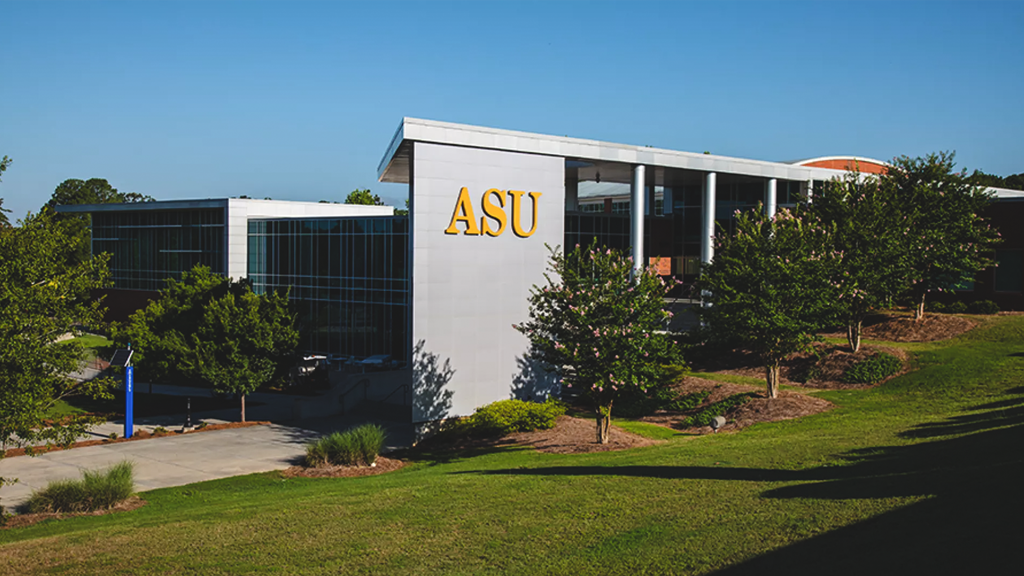
Alabama State Receives Reduced NCAA Infractions Ruling, Will Serve Three Years of Probation

HBCU ORIGINAL

Published

on

Alabama State University’s long-running NCAA infractions case ended with a reduced classification after the NCAA Division I Committee on Infractions ruled the matter as a Level I Mitigated case instead of the more severe aggravated designation.

The decision carries the minimum financial penalty allowed for a Level I violation: a $30,000 fine plus one percent of the football program’s budget, along with three years of probation. University officials said they accept the ruling and will not file an appeal, though they remain convinced the case never warranted one of the NCAA’s highest classifications.

“This confirms what we have maintained from the outset — this case was improperly elevated,” Alabama State representative Dr. Jason Cable said. “The underlying conduct, tied to the former Sports Information Director and head coach, simply does not justify placement among the most severe cases in collegiate athletics.”

The case centered on the alteration of competition statistics for one student-athlete during the 2019 football season. Alabama State acknowledged that a former sports information director changed the athlete’s statistics on the school’s athletics website, allegedly at the direction of the former head football coach.

However, after a contested hearing, the NCAA Committee on Infractions determined there was not enough evidence to hold the former coach personally responsible for directing the changes. Alabama State said its acceptance of responsibility was based solely on the actions of its employee and not on any finding against the former coach.

University officials also emphasized that the NCAA found no lack of institutional control or failure to monitor within the athletics department.

Despite the reduced classification, Alabama State President Dr. Quinton T. Ross Jr. questioned the consistency of the NCAA’s enforcement process.

“While today’s decision is a downgrade from the Level I aggravated classification, we still believe that the scope of the penalty does not reflect the university’s involvement, or lack thereof, in this matter,” Ross said.

Ross pointed to what he called a significant disparity between Alabama State’s penalties and those issued to the University of Arizona. According to the university, Arizona, which certified the student-athlete’s eligibility and benefited competitively, received a Level III violation and a $500 fine, while Alabama State was assessed a Level I violation despite not certifying the player’s eligibility or receiving a competitive advantage.

“We believe the standards should be applied consistently across all institutions,” Ross said. “This case underscores the importance of fairness and accountability throughout the NCAA governance process.”

Ross also credited Vice President of Intercollegiate Athletics and General Counsel Kenneth Thomas for helping secure a reduction in what could have been more severe sanctions.

To address the issues identified during the investigation, Alabama State said it has already implemented several compliance measures, including revised statistical reporting procedures, expanded auditing practices, enhanced postgame reviews, and additional NCAA compliance education for athletics staff.

The university said those measures will remain in place throughout its probationary period.

With the case now officially resolved, Alabama State plans to move forward without an appeal.

“The institution is ready to begin its probationary period, fulfill all associated obligations, and direct its full energy to its student-athletes, its programs, and its future,” the university said.

Continue Reading

Campus

Tuskegee University Introduces New Student Policies Focused on Professionalism and Career Readiness

HBCU ORIGINAL

Published

on

TUSKEGEE, Ala. Tuskegee University is introducing new student policies focused on professionalism, academic success, and career readiness as the university prepares to welcome its largest incoming class in 32 years.

In a message to parents of incoming students, President Dr. Mark A. Brown announced updated expectations covering student attire, classroom attendance, and cellphone use.

Under the new dress code, students will not be permitted to wear bonnets, du rags, bedroom shoes, or revealing clothing in classrooms, the university cafeteria, or during official campus events, including Convocation. Students attending business meetings and other professional events will also be expected to wear business attire with appropriate footwear.

Brown said the goal is to help students prepare for life after graduation, not to limit their college experience.

“The goal here is not meant to restrict students from enjoying the Tuskegee Experience, but to prepare them with a solid foundation for the workforce they will enter once they leave Tuskegee.”

The university is also strengthening its classroom expectations. Cellphones must remain off during class unless an instructor allows their use, and attendance will be monitored more closely to encourage academic success.

As part of its expanded career readiness initiative, students will be expected to complete internships, identify professional certifications related to their career goals, and build a professional resume before graduation. Tuskegee currently offers more than 30 professional certification opportunities at no additional cost.

The new policies have already sparked conversations throughout the HBCU community. Some believe the changes continue the long standing tradition of preparing students for professional careers, while others question whether banning items such as bonnets and du rags reinforces outdated views of professionalism.

Founded in 1881, Tuskegee University has built a legacy of developing leaders in business, education, science, engineering, the military, and public service. University leaders say these updated expectations are intended to strengthen that tradition while helping students transition successfully into the workforce.

As students return to campus this fall, many will be watching to see how the new policies shape the student experience and whether they become a model for other HBCUs across the country.

Continue Reading

Alumni Impact

Miles College Electrifies the Field by Welcoming Recent Graduate Daja Gratton as Steaming Flags Instructor

HBCU ORIGINAL

Published

on

The rhythm is about to get even hotter at Miles College as the institution proudly announces Class of 2025 powerhouse Daja Gratton as the newest instructor for the legendary Steaming Flags!

From 2021 through 2025, Gratton brought unmatched fire and precision to the field as a standout performer with both the Purple Marching Machine and the Steaming Flags. Throughout her dynamic collegiate career, she mastered the complex art of color guard performance while representing Miles College with fierce pride and undeniable excellence. Her journey stands as a testament to elite discipline, synchronized teamwork, and the gold standard of the university band program.

During her time as a student performer, Gratton was the heartbeat of one of the most thrilling traditions at Miles College. Her work with the Steaming Flags injected high energy, stunning visual artistry, and pure school spirit into halftime shows and competitions that mesmerized crowds and uplifted the entire campus community.

Now, she steps into a leadership role ready to ignite the next generation of performers! Gratton brings a deep passion for mentorship and coaching, transforming her direct field experience into powerful instruction. She is dedicated to building confidence, elite sportsmanship, and sharp technical skills in aspiring auxiliaries, proving her impact extends far beyond the stadium lights.

Miles College celebrates Daja Gratton for her phenomenal accomplishments and welcomes her back to lead the Steaming Flags into an unforgettable new era of excellence!

About the Miles College Steaming Flags

The Steaming Flags serve as the official color guard and visual auxiliary unit for the famous Miles College Purple Marching Machine in Fairfield, Alabama. They are widely celebrated as one of the most dynamic and visually captivating performance groups in collegiate marching band culture.

  • Visual Heartbeat of the Band: The Steaming Flags transform the musical power of the Purple Marching Machine into synchronized physical art. They add vibrant color, motion, and theatrical flare to every halftime show, parade, and stadium performance.

  • Dynamic Performance Style: In the celebrated tradition of historically Black colleges and universities, the Steaming Flags go far beyond standard flag spinning. Their routines blend intricate flag manipulation, rapid tosses, sharp marching techniques, and expressive dance choreography that matches the driving tempo of the band.

  • Elite Training and Tradition: Performing with this unit requires intense stamina, rhythm, technical precision, and flawless coordination. Members undergo rigorous conditioning to execute complex visual routines while maintaining peak energy and showmanship from the first beat to the final whistle.

  • Leadership and Pride: As premier ambassadors for Miles College, the flag line embodies school spirit and cultural pride. The unit fosters lifelong sisterhood and leadership development, making experienced alumni instructors like Daja Gratton essential for preserving their rich standards of excellence.

Continue Reading

Campus

Shaw University Divinity School Receives $1 Million Grant to Expand Digital Theological Education Across North Carolina

HBCU ORIGINAL

Published

on

RALEIGH, N.C. — Shaw University Divinity School is expanding access to theological education with the support of a $1 million grant from Lilly Endowment Inc. The five year grant will help the Divinity School create a statewide network of digital academies designed to bring graduate level theological education directly to churches and ministry leaders throughout North Carolina.

The funding comes through Lilly Endowment’s Thriving Congregations Initiative and will support partnerships with more than 40 congregational associations to establish local digital learning communities. The program will provide church leaders with accessible opportunities for ministry training, leadership development, certificate programs, and congregational renewal.

Through an advanced online learning platform, participants will have access to live instruction, self paced courses, peer discussions, and practical resources while continuing to serve within their local congregations.

Over the next five years, the initiative is expected to engage between 800 and 1,000 church leaders while creating pathways for participants to continue their education through advanced graduate programs at Shaw University Divinity School.

“A localized digital academy approach to accessible theological training will help strengthen congregations as future learning communities,” said Dr. Mark G. Harden, dean of Shaw University Divinity School.

The initiative reflects Shaw’s continued commitment to preparing faith leaders with the knowledge, skills, and resources needed to serve evolving communities while expanding educational opportunities beyond traditional classroom settings.

Church and ministry leaders interested in participating in the program can contact Rev. Dr. Saundra Williams at saundra.williams@shawu.edu.

About Shaw University

Founded in 1865, Shaw University is the first Historically Black College and University established in the South. The university’s mission is to advance knowledge, support student achievement, strengthen spiritual and ethical values, and prepare a diverse community of learners to become future global leaders. Shaw University is led by President Dr. Paulette R. Dillard.

About Shaw University Divinity School

For more than 90 years, Shaw University Divinity School has prepared spiritual and ethical leaders for service in churches, nonprofit organizations, education, healthcare, business, and public life. The Divinity School offers the Master of Divinity, the Master of Arts in Theology and Ministry, and beginning in Spring 2027, the Doctor of Education in Artificial Intelligence and Moral Agency.

Continue Reading

Trending Now