
HBCU ORIGINAL
Antwain Banks’ Fourth Quarter Touchdown Sparks Bowie State, but Davenport Holds on for a 17-14 Win

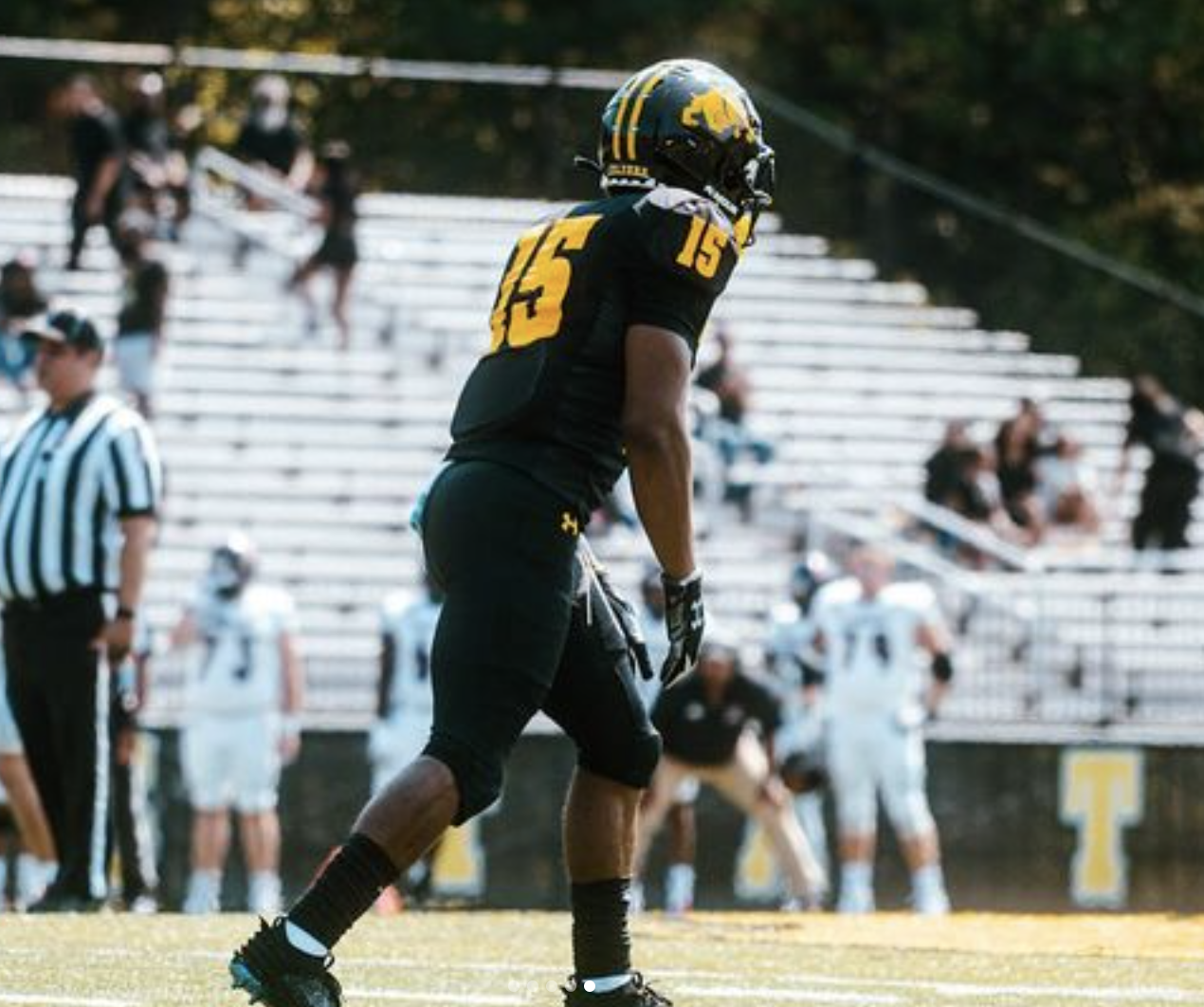
Antwain Banks’ Fourth Quarter Touchdown Sparks Bowie State, but Davenport Holds on for a 17-14 Win

Bowie, MD – In a game dominated by defense, the Davenport Panthers narrowly escaped with a 17-14 victory over the HBCU Bowie State Bulldogs on Saturday afternoon at Bulldog Stadium. The win moves Davenport to 2-0 on the season and improves their record against the Bulldogs to 2 0.
The Panther’s first score on their second drive came off Brandon Gielow‘s foot when he successfully drilled a 42-yard field goal to give DU the first lead of the game, 3-0. From there, Davenport would control the momentum of the game when, in the second quarter, Mike O’Horo connected with Preston Smith on a fade route in the back of the end zone for the touchdown, making it 10-0.
Bowie State would respond 2 minutes before the half late in the second quarter. After a crucial stop by the Bowie Defense, Kevin Taylor‘s 11-yard drive would cap off an eight-yard touchdown pass to Awesome Waller, Jr., bringing the score to 10-7. However, Davenport struck back right before halftime when O’Horo found Antjuan Collins near the three-yard line, and after a quick juke, Collins took it into the end zone to give the Panthers a 17-7 lead at halftime.
The second half became a defensive showdown, with both teams struggling to capitalize on long drives. Bowie State finally broke through at the start of the fourth quarter when Taylor launched a 30-yard touchdown pass to Antwain Banks, who debuted for the Bulldogs after transferring from Lincoln University. This score narrowed the deficit to 17-14 and gave Bowie State hope for a comeback.

Why Antwain Banks’ Impact and the Story Is Important.
As a Maryland high school standout at quarterback, Bank was a dynamic quarterback at Edgewood High School in Edgewood, Maryland. Despite his success as a state leader in high school, college programs didn’t know what to do with him, leaving him under-recruited and without offers until just before graduation, when Frostburg University extended an offer to play quarterback. Ironically, he only played quarterback in high school after the starting QB transferred in the middle of his junior year at Edgewood. As the most dynamic athlete on the field, initially playing slot receiver, he stepped into the quarterback role because there were no other viable options. He took on the challenge, hoping colleges would recognize how explosive and versatile he was with the ball in his hands.
Despite his remarkable stats as a dual-threat quarterback, rushing for over 4,000 yards and 46 touchdowns during his sophomore and junior seasons, he led the state in rushing both years, ranking first in touchdowns his junior year and finishing second in touchdowns his senior year.
High School Honors:
- 1st in state for scoring & touchdowns (26) in 2018
- 2nd in state rushing (131 ATT | 1,686 YDS) in 2018
- 5th in state total yards (2,498) in 2018
- 1st in the 3A division for total yards in 2018
- 1st in 3A rushing (126 ATT | 1,544 YDS) in 2017
- 1st in 3A division touchdowns (20) in 2017
- 1st in 3A division total yards (2,629) in 2017
- All-Metro mention, All-Conference, and All-County
Collegiate Honors:
- Dean’s List with a 3.8 GPA in 2022
- All-Academic Team with a 3.38 GPA in the 2023 slot as a redshirt freshman receiver

After redshirting at Frostburg, he transitioned to slot receiver at HBCU Lincoln University in Pennsylvania. Earning a starting position at Lincoln, he soon realized he could better showcase his talents in a more competitive program. This led him to transfer to Bowie State during his sophomore redshirt to pursue a starting role. Banks’ journey to Bowie State is one of perseverance as an under-recruited athlete out of high school. His performance on Saturday—two catches for 57 yards and a touchdown—showed the value of athletes who may have been overlooked but possess the talent to make an impact.
Banks’ story mirrors that of his cousin, Deonte Banks, who also faced limited recruiting opportunities before earning a late scholarship offer from the University of Maryland. Deonte would be a first-round draft pick for the New York Giants, proving that under-recruited athletes can defy expectations when given the chance. Athletes like Antwain Banks are often overlooked by major programs due to their lack of star ratings and limited visibility in their high school markets, often because they come from more rural areas. Factors like a lack of recruiting networks among coaches and outdated recruitment philosophies also contribute to their underexposure. With the rise of social media, some recruiting budgets are being cut as recruiters rely more on online data. Colleges now prefer athletes to come to them through unofficial visits, mega camps, junior days, and game day experiences rather than actively scouting them in person.
Antwain demonstrated talent and knows no ranking. These athletes find ways to contribute at all levels of college football, often walking on or transferring to programs where they can showcase their skills. The Under Recruited Athlete platform exists to highlight these stories, ensuring that athletes with similar paths to Banks have opportunities to be seen and scouted by college programs.
Bowie State showed resilience and heart despite the loss, especially from players like Antwain Banks, whose story embodies the spirit of underrecruited athletes across the country. As college programs look to strengthen their rosters, Banks’ performance is a reminder of the untapped potential in athletes who may not have received high recruiting attention but are fully capable of impacting the field.
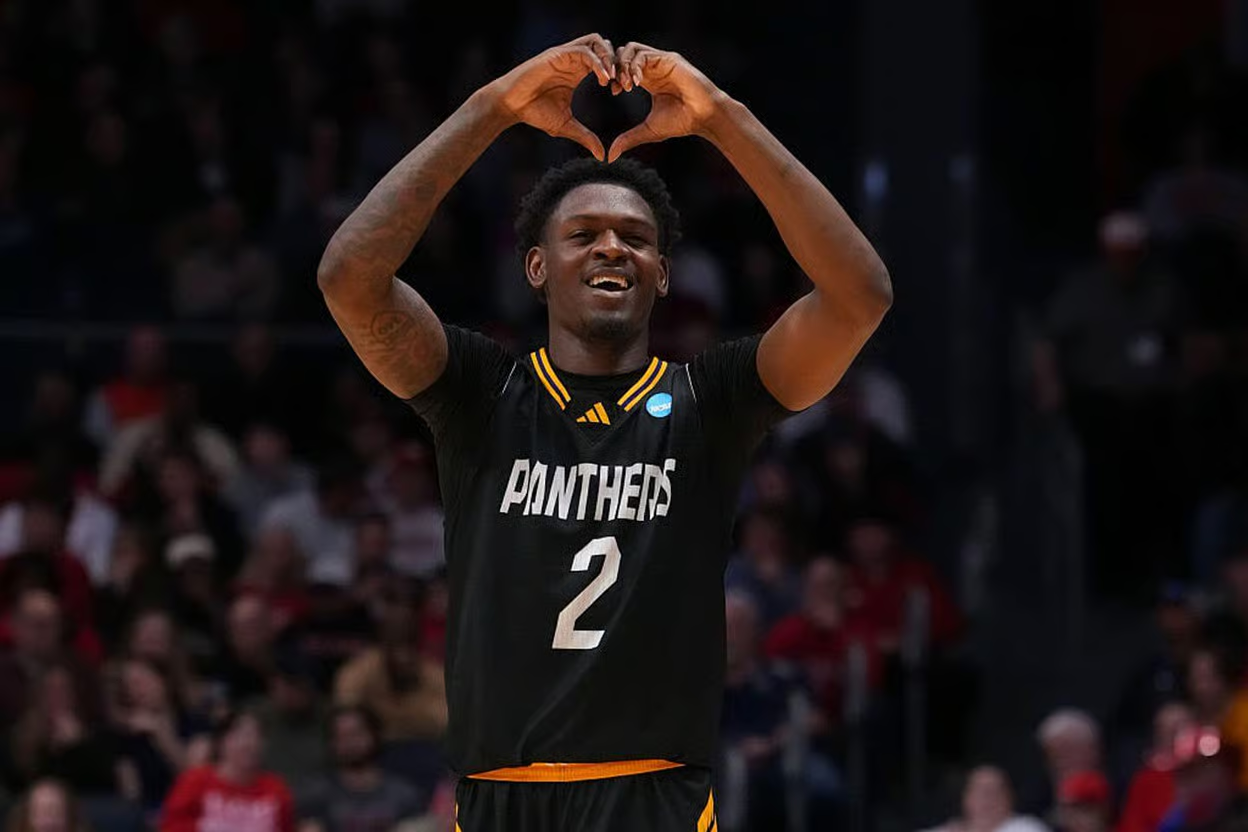
DAYTON, Ohio — Prairie View A&M University secured a historic milestone Wednesday night, earning its first-ever NCAA Tournament victory with a 67–55 win over Lehigh University in the First Four.
Dontae Horne led the charge with a game-high 25 points, while Cory Wells added 19 to pace the Panthers (19–17). Lance Williams chipped in 10 points, helping Prairie View A&M control the game and pull away in the second half.
Making just their third appearance in March Madness, the Panthers delivered a composed performance on the big stage, limiting Lehigh’s offensive rhythm and capitalizing on key scoring runs.
Lehigh (18–17) struggled to find consistency, particularly from leading scorer Nasir Whitlock. After being held scoreless for more than 26 minutes, Whitlock finished with just five points on 2-of-15 shooting—well below his usual production. Hank Alvey provided a bright spot for the Mountain Hawks with 23 points.
With the win, Prairie View A&M advances as a No. 16 seed in the South Region and will take on defending national champion University of Florida in Tampa, Florida.
The victory marks a breakthrough moment for the Panthers, adding their name to the growing list of HBCU programs making noise on college basketball’s biggest stage.
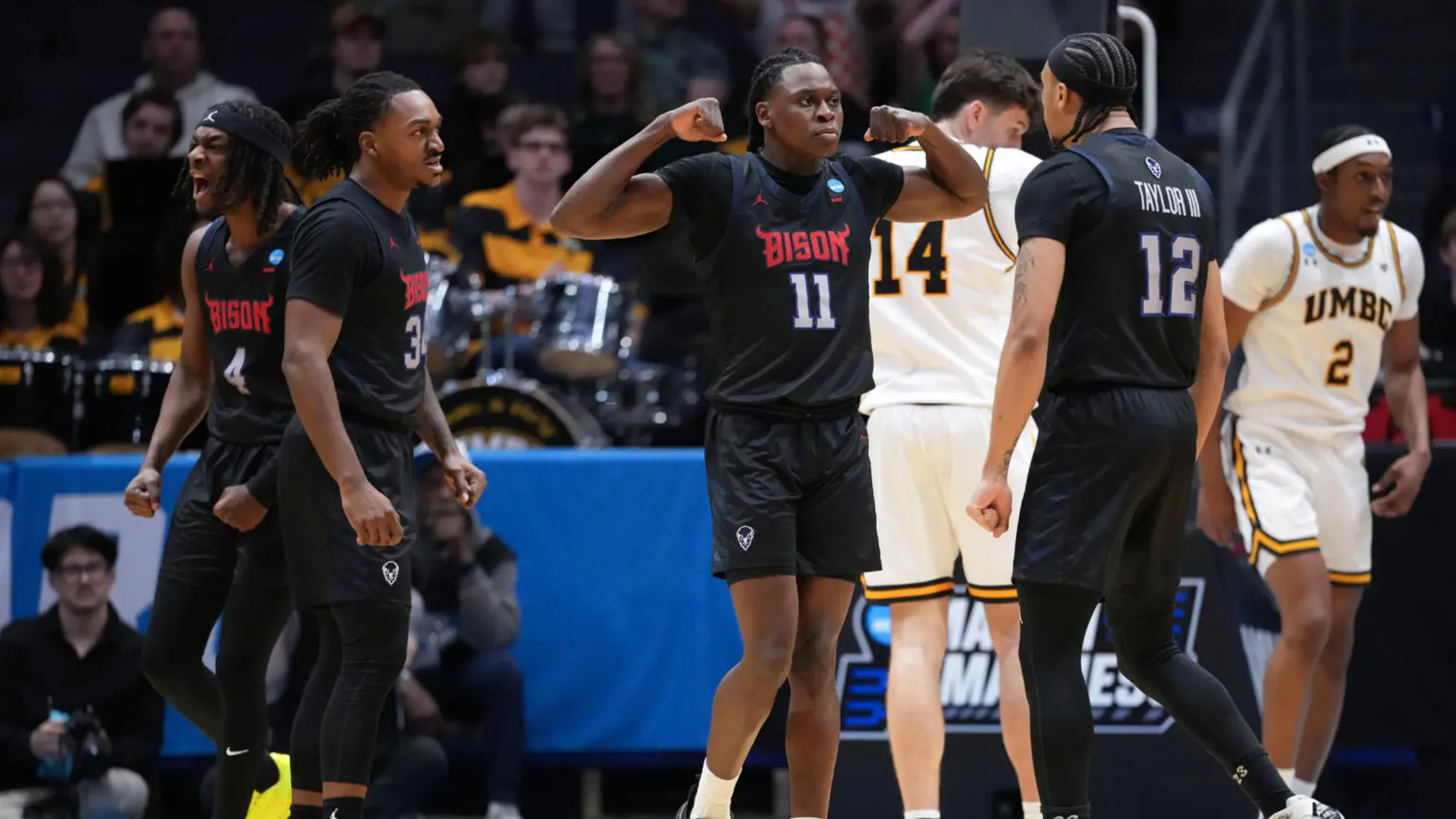
DAYTON, Ohio — Howard University made program history Tuesday night, capturing its first-ever NCAA Tournament victory with a thrilling 86–83 win over University of Maryland, Baltimore County in the First Four.
Bryce Harris delivered a standout performance with 19 points and 14 rebounds, sealing the win with a clutch turnaround jumper with just 13 seconds remaining. His late-game heroics helped the Bison hold off a determined comeback by UMBC.
Ose Okojie led Howard with a career-high 23 points, powering the Bison (24–10) to a long-awaited breakthrough after entering March Madness winless in four previous appearances.
“We’ve accomplished a lot, but getting that first NCAA Tournament win means everything,” said head coach Kenneth Blakeney.
UMBC (24–9) made things interesting down the stretch. A three-pointer from DJ Armstrong Jr. cut the deficit to two with under a minute left. After Harris extended the lead, Jah’Likah King answered with a layup to keep it a one-possession game. But Howard held firm—Isaiah Brown split a pair of free throws, and Armstrong’s last-second three-point attempt missed, securing the historic win.
The Bison controlled much of the game, leading for nearly the entire contest and building a 13-point advantage in the first half. Okojie set the tone early with 16 first-half points, helping Howard take a 49–41 lead into halftime.
UMBC, known for its historic upset over Virginia in the 2018 NCAA Tournament, was looking to recreate March magic but fell just short despite strong performances from King (19 points), Armstrong (17), and Caden Diggs (15).
Cedric Taylor III added 16 points for Howard, excelling at the free-throw line before fouling out late in the game.
The Bison now advance as a No. 16 seed in the Midwest Region and will face powerhouse University of Michigan in the next round in Buffalo, New York.
With history already made, Howard now turns its attention to its next challenge on college basketball’s biggest stage.
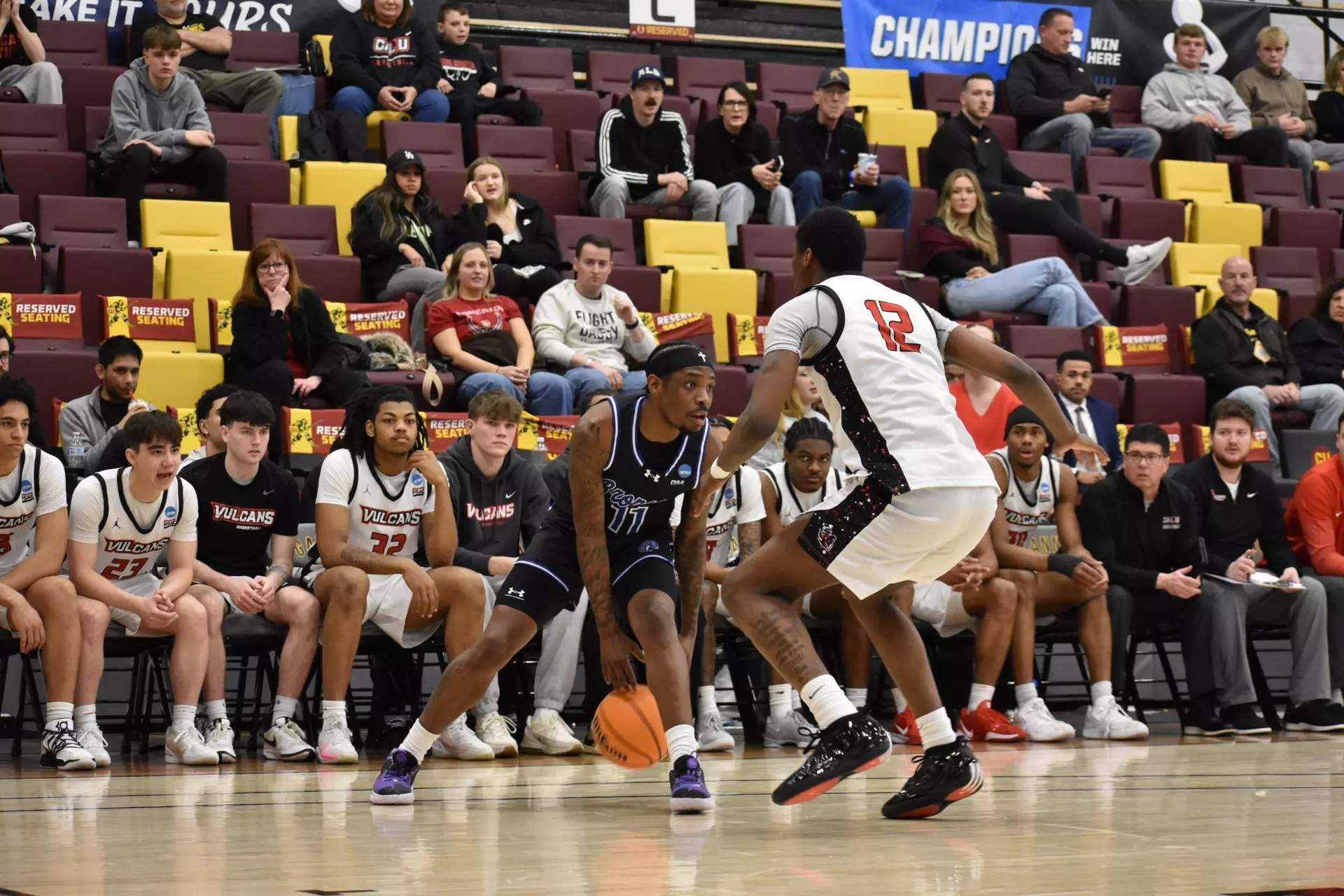
The Fayetteville State University men’s basketball team saw its postseason run come to an end with a 96–83 loss to California University of Pennsylvania in the NCAA Division II Atlantic Regional Quarterfinal.
The game, played at the Highmark Events Center, marked the conclusion of a strong season for the Broncos, who finished 23–7 overall.
🔥 Strong First Half Effort
Fayetteville State controlled much of the first half, showcasing balanced scoring and energy on both ends of the floor.
Big plays from multiple contributors helped the Broncos build momentum, including key shots from the perimeter and strong interior presence. A late three-pointer gave FSU a 45–42 lead, and they entered halftime narrowly ahead 45–44 after a last-second response from California (PA).
⚡ Second Half Shift
The game turned quickly after halftime.
Following an early basket to extend their lead, Fayetteville State was met with a decisive run from California (PA), fueled by transition scoring and perimeter shooting. The Vulcans surged ahead and stretched the lead to double digits, eventually pushing it to 72–54 midway through the second half.
Despite multiple comeback attempts, the Broncos were unable to regain control.
⭐ Standout Performances
-
Ezekiel Cannedy led the Broncos with 20 points
-
Larry Howell recorded a double-double with 15 points and 10 rebounds
-
Terrell Williams added a double-double of 13 points and 15 rebounds
Additional contributions came from:
-
Darius Boben (8 points)
-
Kenneth Brayboy (8 points, late dunks)
📊 Game Notes
-
Final Score: California (PA) 96, Fayetteville State 83
-
Halftime: FSU led 45–44
-
Shooting: 35.3% from the field, 30% from three
-
Bench Points: 34
-
Second-Chance Points: 23
🏁 Season Reflection
Despite the loss, Fayetteville State’s season stands as a major success. The Broncos captured a conference title and carried momentum into the NCAA Tournament, highlighting their depth, toughness, and ability to compete at a high level.
With key contributors stepping up on the national stage, the program continues to build toward deeper postseason runs in the future.
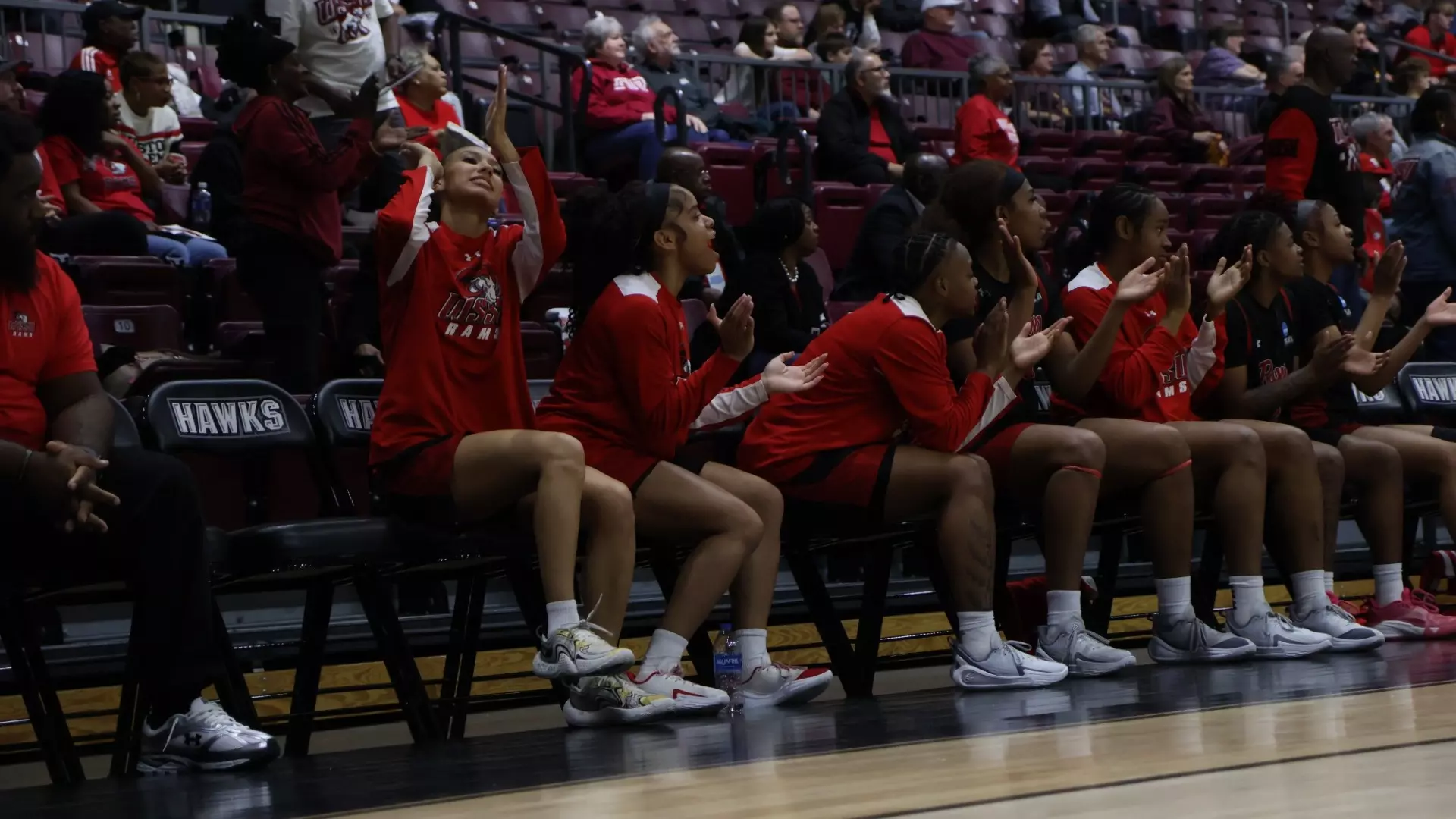
The Winston-Salem State University women’s basketball team saw its remarkable postseason run come to a crushing end Monday night, dropping a 65–64 thriller to Indiana University of Pennsylvania in the NCAA Division II Atlantic Region Championship.
Inside the Kovalchick Convention & Athletic Complex, the Lady Rams battled from start to finish in a game defined by momentum swings, clutch shots, and late-game drama.
Winston-Salem State finishes the season with an impressive 28–4 record, capping off one of the program’s strongest campaigns.
🔥 Back-and-Forth Battle
The Rams showed early resilience, overcoming an early deficit with a strong closing run in the first quarter to take a narrow lead. They carried that momentum into the second, building a double-digit advantage before IUP responded late in the half.
After leading 32–27 at halftime, Winston-Salem State continued to fight through a tightly contested third quarter, holding a 50–47 edge heading into the final period.
💔 Final Seconds Decide It
In the fourth quarter, the Rams appeared in control late, extending their lead to 64–60 with just 36 seconds remaining.
But IUP responded when it mattered most.
A clutch three-pointer in the final seconds gave the Crimson Hawks a 65–64 lead, completing a late comeback. Winston-Salem State had one final opportunity, but a last-second shot attempt missed, sealing the heartbreaking loss.
⭐ Key Performers
-
Ah’Kiyah Pye led the Rams with 16 points and strong all-around play
-
Makayla Waleed added key scoring off the bench
-
Alana Biosse contributed 11 points, including critical three-pointers
As a team, the Rams shot over 40% from the field, forced 19 turnovers, and showed defensive intensity with 13 steals.
📊 Game Snapshot
-
Final Score: IUP 65, WSSU 64
-
Lead changes: 13
-
Ties: 10
-
A true championship-level battle from start to finish
🏁 Season Reflection
Despite the loss, Winston-Salem State’s run to the regional championship highlighted the program’s growth, resilience, and championship potential.
One possession short of advancing, the Lady Rams proved they belong among the nation’s elite in Division II women’s basketball.
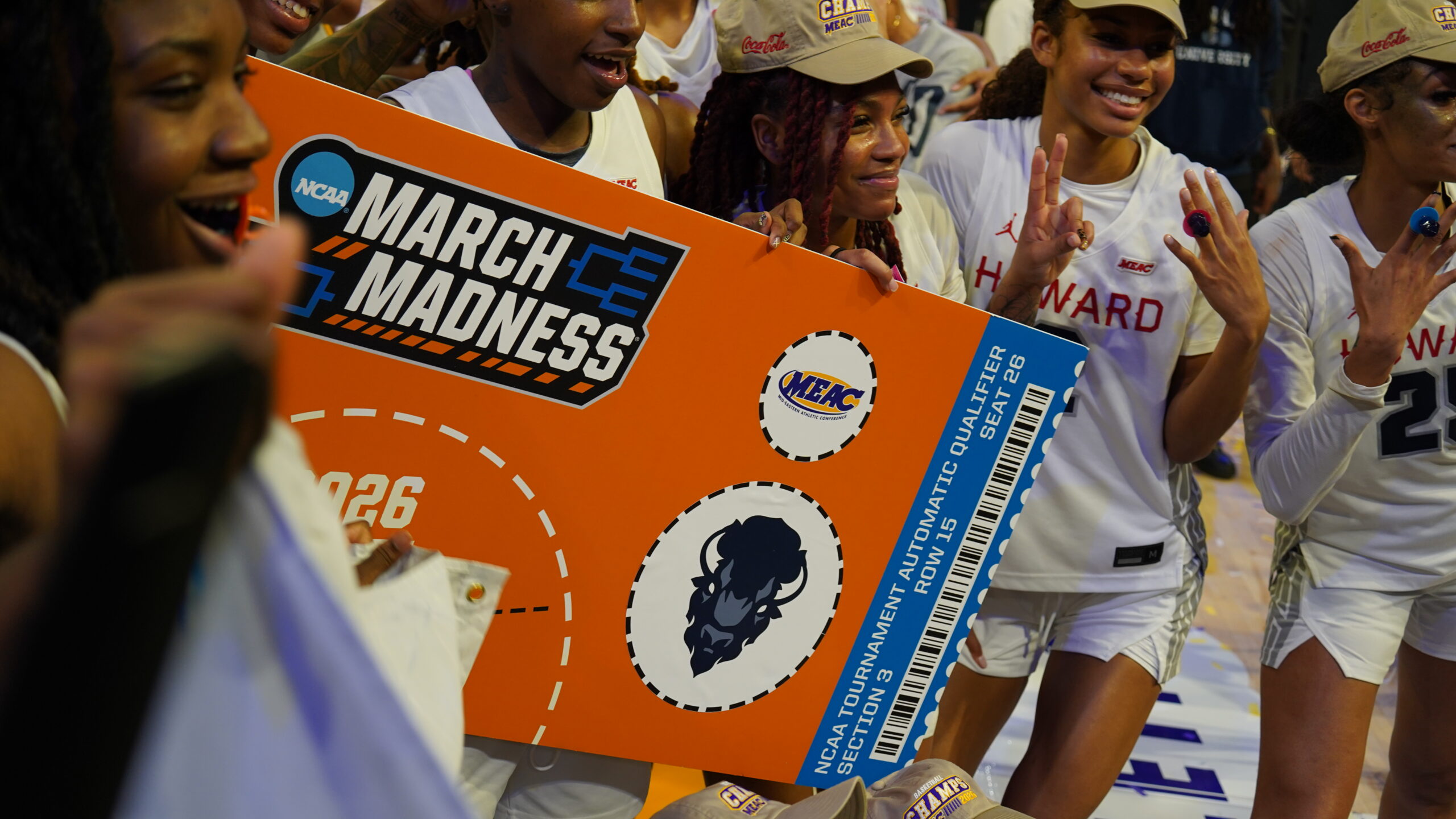
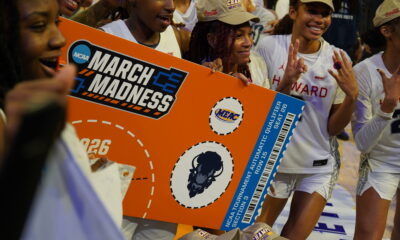
NORFOLK, Va. — Howard University claimed the 2026 Mid-Eastern Athletic Conference (MEAC) Women’s Basketball Tournament title Saturday with a 53–46 win over Norfolk State at The Scope, completing a sweep of the league’s tournament crowns after the Howard men also won the MEAC championship.
The Bison, who last earned a MEAC title and NCAA automatic bid in 2022, were led by MEAC Player of the Year and Tournament MVP Zennia Thomas, who posted 15 points and eight rebounds. Nile Miller added 12 points and a game-high 13 boards, while Ariella Henigan, the league’s Rookie of the Year, chipped in 11 points. Howard improved to 26–7 on the season.
Norfolk State, aiming for a fourth consecutive MEAC tournament title and NCAA berth, finished its campaign at 18–13. Jasha Hinton led the Spartans with 11 points, five rebounds, and five assists, and Anjanae Richardson added 10 points.
After trailing 16–9 after the first quarter, Norfolk State rallied to tie the game 27–27 at halftime. Howard responded in the second half with key baskets from Zoe Stewart and a 9–2 run that gave the Bison a 42–33 advantage after three quarters. Norfolk State closed the gap to 47–43 in the final period, but Howard’s Miller scored inside to extend the lead, and the Bison finished strong with four of the game’s final seven points to secure the 53–46 win.
Head coach Ty Grace praised the Spartans’ program and credited his team’s preparation and execution. Miller, the lone senior at the postgame press conference, reflected on finally capturing a MEAC title after four seasons of trying.
2026 MEAC Women’s Basketball All-Tournament Team
-
Zennia Thomas, Howard (Tournament Outstanding Player)
-
Ariella Henigan, Howard
-
Jasha Clinton, Norfolk State
-
Anjanae Richardson, Norfolk State
-
Kaliya Perry, UMES
-
 HBCU ORIGINAL3 weeks ago
SUNO Wins First Conference Title Since 2012
-
 HBCU ORIGINAL2 months ago
🦁🐺 HBCU Original — Lincoln & Cheyney Deliver Big Performances at Widener Schuylkill Showdown
-
 HBCU ORIGINAL2 weeks ago
Morehouse Captures SIAC Championship, Tops Tuskegee 66–56
-
 HBCU ORIGINAL2 weeks ago
Miles Lady Bears Complete Historic Three-Peat with SIAC Tournament Victory
-
 HBCU ORIGINAL2 weeks ago
Tennessee State Ends 30-Year Wait, Dominates Morehead State for 2026 OVC Title
-
 HBCU ORIGINAL1 week ago
Howard Women Capture MEAC Championship, Defeat Norfolk State 53–46
-
 HBCU ORIGINAL4 weeks ago
Fayetteville State Outlasts Bowie State, Advances to CIAA Women’s Championship
-
 HBCU ORIGINAL3 weeks ago
Fayetteville State Rallies Late to Capture 2026 CIAA Men’s Basketball Championship