
Sports
The JUCO Comeback: Diego Pavia Defeats the NCAA, Joe Thomas Sr. the Poster Child for ‘I Still Got It!


In a surprising twist that’s shaking up college football, the NCAA has found itself in the middle of a significant eligibility shake-up — and it’s all thanks to a landmark legal case involving a player who probably hasn’t been on most fans’ radar. Enter Diego Pavia, whose legal battle with the NCAA over his JUCO eligibility is why former players across the country are suddenly dusting off their old cleats and asking, “If Diego can do it, why can’t I?”
Pavia, a former JUCO quarterback, defeated the NCAA in court, securing a monumental victory for players who’ve spent time in junior college but were previously told their eligibility was shot after too many years had passed. The court issued an injunction, effectively allowing Pavia to continue his college career despite being out of the game for several years. And while Pavia’s case was all about fairness for JUCO players, it had an unintended side effect — the rise of a new generation of “washed-up” former players coming out of retirement to reclaim their eligibility.
The Lawsuit That Changed Everything
In what is being called a “game-changer” by legal experts, Diego Pavia’s victory has opened the door for a wave of former JUCO players to declare, “Hey, I’ll get it suddenly!” Pavia filed a lawsuit after the NCAA refused to grant him eligibility, citing an obscure rule that prevented players who’d been out of college football for too long from getting their eligibility back. But the court didn’t see it that way. The ruling was clear: JUCO players deserve the same four years of eligibility, no matter how much time has passed.
Pavia’s victory sent shockwaves through the world of college sports, and suddenly, every former JUCO athlete with a few grey hairs and a dad bod began to rethink their retirement plans.

Joe Thomas Sr. Becomes the New Poster Child for “I Can Still Play!”
And here’s where things get genuinely hilarious. While Pavia’s case was about fairness, it’s Joe Thomas Sr. who became the unintentional poster child for this new wave of players. If you haven’t heard of Joe Thomas Sr., he’s about to be your new hero — and probably the last person you’d expect to inspire a generation of older, “washed-up” football players.
In his late 40s, Thomas made history as the oldest player to ever play in a Division I football game, suiting up as a running back for HBCU MEAC member South Carolina State University — the team that was the runner-up in the 2024 Black College Football Championship Celebration Bowl just a week ago in Atlanta, Georgia. At 47 years old, Thomas wasn’t exactly burning up the field, but with sheer determination and the legal win from Diego Pavia’s case, Joe Thomas Sr. proved that age is just a number and there’s always room for a little more football. He wasn’t sprinting down the field, but he was running. Slowly, yes — but running nonetheless.
And now, thanks to Pavia’s case, older athletes — some who haven’t played in years — are desperate to follow in Thomas’ footsteps.

A New Era of “Senior” JUCO Comebacks
Just imagine the scene: Bob “The Bulldozer” from the Class of 1997, who hasn’t touched a football since his last campus kegger, suddenly jumps on Facebook and posts a picture of his high school highlight reel, claiming, “Hey, Joe Thomas Sr. did it. I’m ready for my comeback.” You might even catch Terry “The Tornado” from 2002 hitting up coaches on LinkedIn to see if they need a “veteran” player with lots of wisdom and a few extra pounds.
All these “veteran” players now have Diego Pavia’s lawsuit to thank and Joe Thomas Sr.’s legendary comeback story. There’s a whole new crop of 40-something men who now think they can still make it, and they’ll be referencing Joe Thomas Sr. as the prime example of why age is just a number.
The NCAA’s Worst Nightmare: The Rise of the Senior League
The NCAA never could have predicted this: a flood of older players showing up at their doorsteps, paperwork in hand, demanding to be let back into college football. Thanks to Pavia and Thomas, the NCAA is now facing a new problem: how to handle an influx of athletes who have been out of the game for years, if not decades, but now want to take advantage of the rule change.
“Coach, I’m 45, but if you put me on the field, I’ll show you a thing or two,” might just be the following line you hear from the new batch of JUCO hopefuls. And college football programs? They’re about to be flooded with email inquiries from players who were once “too old” but now have a new lease on their football careers.
Thanks to Diego Pavia’s legal win, the NCAA’s new ruling, and the unexpected rise of Joe Thomas Sr. as the face of “I Still Got It,” we’re about to enter an extraordinary era of college football. A new wave of former JUCO players, who have long since hung up their helmets, are now determined to return to the field. Whether it’s Bob “The Bulldozer“ or Terry “The Tornado,“ expect to see a lot more grey-haired players showing up to recruit camps, proclaiming they’ve got “untapped potential“ — and that Joe Thomas Sr. paved the way for them to show it.
Who knows? The next Joe Thomas Sr. might be an ex-JUCO player sitting on a recliner right now, talking about how “he was the best running back in his prime“ — and now, with the new NCAA rule, that prime might extend a few more years.
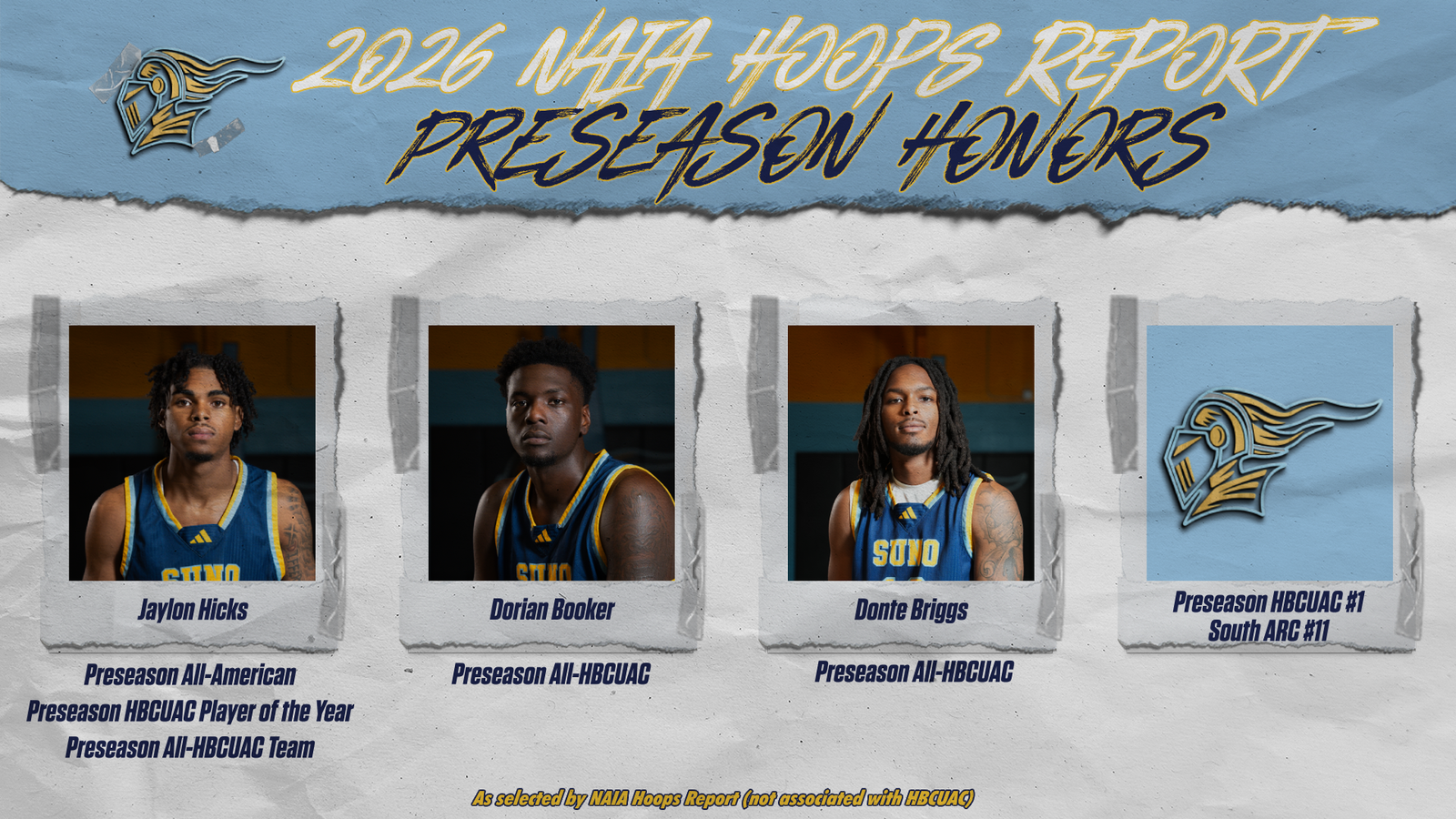
SUNO Leads HBCUAC Preseason Poll as Hicks Takes Player of the Year Honors
Jaylon Hicks and Dorian Booker earn First Team recognition as the defending tournament champions prepare for another title chase.
NEW ORLEANS — Southern University at New Orleans will enter the 2026–27 men’s basketball season with a championship to defend and the conference’s top preseason billing.
The Knights received 200 points and 11 first-place votes in the HBCU Athletic Conference coaches’ poll, securing the No. 1 spot ahead of Tougaloo, Stillman and Dillard. Sophomore Jaylon Hicks was named Preseason Player of the Year, while teammate Dorian Booker joined him on the Preseason All-HBCUAC First Team.
For a program coming off a breakthrough postseason, the recognition brings higher expectations. Head coach James A. Matthews, III said those honors reflect his players’ work, but the Knights still have to prove themselves on the court.
“Being picked first is an honor, but it doesn’t win us a single game,” Matthews said. “Every team on our schedule is going to give us their best shot, and we have to show up ready every night.”
Hicks earned the league’s top individual preseason honor with 170 points from conference head coaches, the highest total among all players. The sophomore wing returns after averaging 15.6 points, 6.6 rebounds, 3.4 assists and 2.1 steals per game as a freshman.
His first season included 13 HBCUAC Player of the Week awards, Freshman of the Year recognition and selections to the All-HBCUAC First Team, All-Defensive Team and All-Tournament Team.
Booker gave SUNO a strong presence inside during his debut season, averaging 14.9 points and 7.7 rebounds per game. The center earned Newcomer of the Year honors, a Second Team All-HBCUAC selection and a spot on the All-Tournament Team.
Together, they helped fuel a championship run that required SUNO to beat three of the conference’s top teams.
After finishing fourth in the HBCUAC West Division, the Knights defeated East Division champion Stillman on its home floor in the quarterfinals of the Hope Credit Union HBCUAC Basketball Championship. SUNO then knocked off West Division No. 2 seed Philander Smith in the semifinals before beating top-seeded Tougaloo for the title.
The championship sent the Knights to the opening round of the NAIA National Championship for the first time since 2012.
Nearly all of SUNO’s contributing players return for a season the program has named The Run Back. That continuity gives the Knights an experienced group, though the preseason poll suggests plenty of competition awaits.
Tougaloo finished second with 188 points. Stillman placed third with 163 points and one first-place vote, followed by Dillard with 156. Talladega received the remaining first-place vote and finished fifth with 150 points, just ahead of Philander Smith’s 148.
Fans can follow the 2026–27 season on the Urban Edge Network. The 2027 Hope Credit Union HBCUAC Basketball Championship is scheduled for February 24–28 at Ellis Davis Fieldhouse in Dallas.
2026–27 Preseason All-HBCUAC First Team
| Player | Position | School | Jaylon Hicks | Guard | Southern University at New Orleans | Dorian Booker | Center | Southern University at New Orleans | Kaleb Jeffries | Shooting guard | Fisk University | Dasean Sellers | Forward | Stillman College | Daiquan Coach | Forward | Wilberforce University |
|---|
Preseason Player of the Year: Jaylon Hicks, SUNO
2026–27 HBCUAC Men’s Basketball Predicted Order of Finish
| Rank | School | Points | First-place votes | 1 | Southern University at New Orleans | 200 | 11 | 2 | Tougaloo College | 188 | 0 | 3 | Stillman College | 163 | 1 | 4 | Dillard University | 156 | 0 | 5 | Talladega College | 150 | 1 | 6 | Philander Smith University | 148 | 0 | 7 | Paul Quinn College | 107 | 0 | 8 | Huston-Tillotson University | 102 | 0 | 9 | Fisk University | 97 | 0 | 10 | Wilberforce University | 95 | 0 | 11 | Voorhees University | 90 | 0 | 12 | Rust College | 64 | 0 | 13 | Oakwood University | 61 | 0 | 14 | Wiley University | 60 | 0 | 15 | Jarvis Christian University | 56 | 0 | 16 | University of the Virgin Islands | 31 | 0 |
|---|
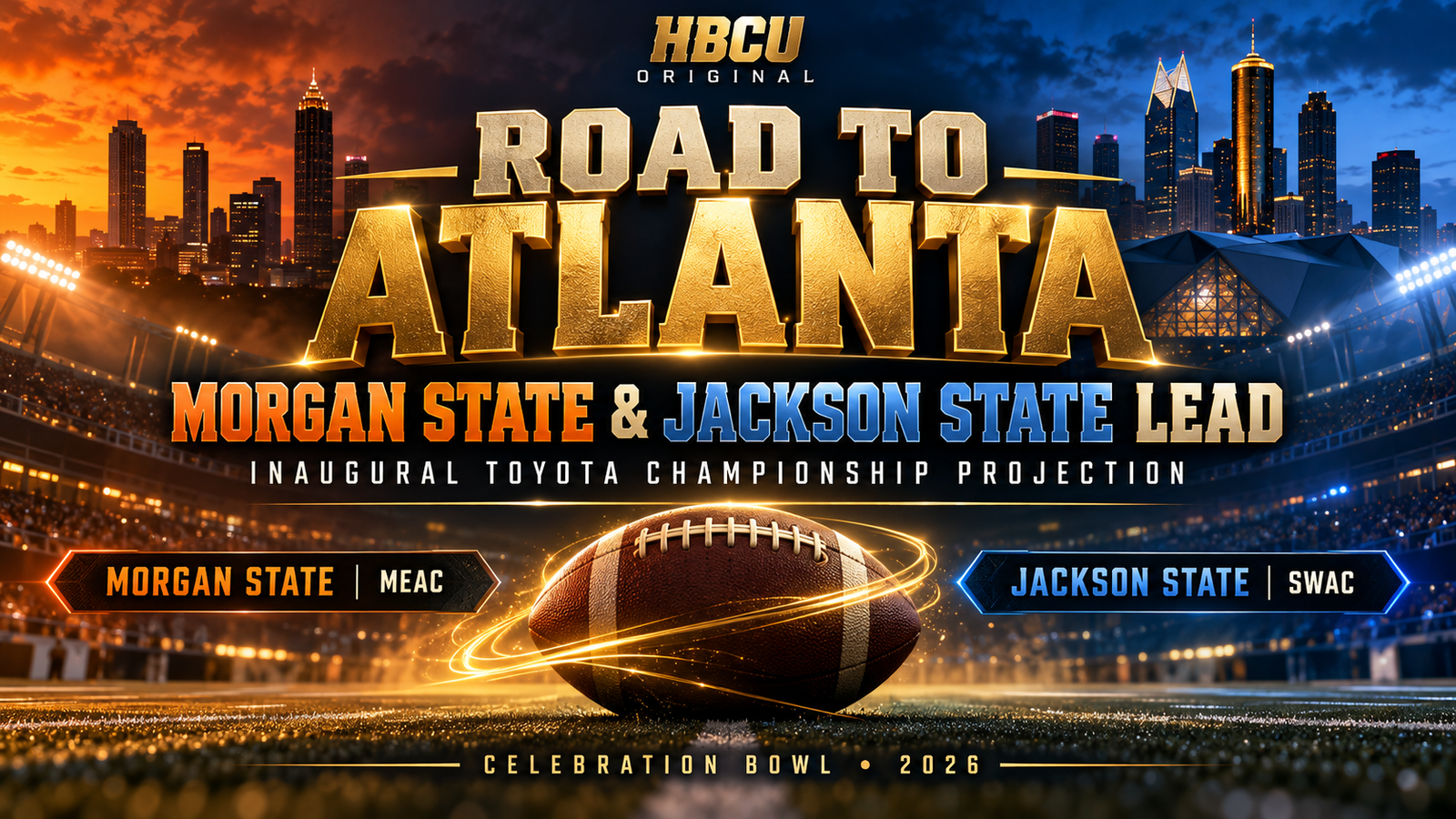
The new model measures each team’s path to the Celebration Bowl as the MEAC and SWAC championship races enter a critical stretch.
ATLANTA — Morgan State and Jackson State hold the strongest positions in their respective conferences in the inaugural Toyota Championship Projection, released October 21.
The model gives Morgan State a 63.4% chance of securing the MEAC’s berth in the Celebration Bowl. Jackson State leads the SWAC championship projection at 40.3%, with Alabama A&M close behind at 29.9%.
Unlike a traditional power ranking, the projection evaluates both a team’s performance and its remaining route to a championship. It combines team strength, quality of competition, scoring efficiency, conference standings, remaining opponents, game location and selected computer rankings.
The model then simulates the rest of the conference season, applying standings and applicable tiebreak procedures to determine how often each team advances.
John T. Grant, the bowl’s executive director, said the tool is intended to give fans and media more insight into the championship races while encouraging informed discussion.
“It does not replace what happens on the field, and it is not meant to tell us who will win,” Grant said. “It is a tool to help us better understand the road to Atlanta and create more informed conversation around the Celebration Bowl.”
Morgan State Opens as the MEAC Favorite
With MEAC play beginning this week, all six programs enter the conference schedule with an opportunity to establish themselves. Morgan State starts with the strongest projection, holding nearly a two-in-three chance of earning the league’s Celebration Bowl berth.
South Carolina State is the closest challenger at 19.7%, followed by Delaware State at 7.3%.
| Rank | Team | MEAC Championship Projection |
|---|---|---|
| 1 | Morgan State | 63.4% |
| 2 | South Carolina State | 19.7% |
| 3 | Delaware State | 7.3% |
| T-4 | Howard | 4.5% |
| T-4 | Norfolk State | 4.5% |
| 6 | North Carolina Central | 0.7% |
The MEAC’s five-game conference schedule leaves little room for mistakes. Early head-to-head results could quickly change the percentages, particularly when teams near the top of the projection meet.
Morgan State hosts Howard this week, while South Carolina State welcomes Norfolk State and North Carolina Central visits Delaware State.
Jackson State and Alabama A&M Set the Pace in the SWAC East
Jackson State leads the East Division projection at 49.5%, but Alabama A&M remains within striking distance at 36.6%.
Together, the two programs account for most of the projected division titles. Bethune-Cookman sits third at 9.3% and has an immediate opportunity to improve its position against Jackson State.
| Rank | Team | SWAC East Division Projection |
|---|---|---|
| 1 | Jackson State | 49.5% |
| 2 | Alabama A&M | 36.6% |
| 3 | Bethune-Cookman | 9.3% |
| 4 | Alabama State | 4.2% |
| 5 | Mississippi Valley State | 0.4% |
| — | Florida A&M | 0.0% — Ineligible |
The release identifies Florida A&M as ineligible for postseason advancement. The Rattlers remain included in the simulations because their results can still affect conference records and tiebreak scenarios.
Grambling State Leads a Crowded SWAC West
The West Division presents a more evenly distributed race, with five teams holding at least a 10% chance of finishing on top.
Grambling State leads at 41.6%, followed by Prairie View A&M at 26.0%. Southern, Alcorn State and Arkansas-Pine Bluff remain closely grouped behind them.
| Rank | Team | SWAC West Division Projection |
|---|---|---|
| 1 | Grambling State | 41.6% |
| 2 | Prairie View A&M | 26.0% |
| 3 | Southern | 12.3% |
| 4 | Alcorn State | 10.1% |
| 5 | Arkansas-Pine Bluff | 10.0% |
| 6 | Texas Southern | 0.03% |
With little separation among the teams chasing the top two, a single result could significantly change the division’s outlook.
Southern visits Texas Southern this week, while Arkansas-Pine Bluff travels to Florida A&M. Both games carry weight for West Division contenders trying to improve their position.
East Division Teams Lead the Overall SWAC Outlook
Reaching the SWAC Championship Game is only part of the path to Atlanta. A division winner must also capture the conference title to secure its Celebration Bowl appearance.
Jackson State and Alabama A&M combine for 70.2% of the model’s projected SWAC championships. Grambling State has the strongest overall championship projection among West Division teams at 10.2%.
| Rank | Team | SWAC Championship Projection |
|---|---|---|
| 1 | Jackson State | 40.3% |
| 2 | Alabama A&M | 29.9% |
| 3 | Grambling State | 10.2% |
| 4 | Bethune-Cookman | 6.0% |
| 5 | Prairie View A&M | 5.2% |
| 6 | Alabama State | 2.7% |
| 7 | Southern | 2.1% |
| 8 | Alcorn State | 1.8% |
| 9 | Arkansas-Pine Bluff | 1.7% |
| 10 | Mississippi Valley State | 0.12% |
| 11 | Texas Southern | Less than 0.01% |
| — | Florida A&M | 0.0% — Ineligible |
Six Games Could Reshape the Projections
Howard’s visit to Morgan State gives the Bears their first opportunity to back up their position as the MEAC favorite. A Bison victory would immediately improve Howard’s outlook and tighten the conference race.
South Carolina State will try to protect its position against Norfolk State. For the Spartans, a road win would provide an important head-to-head advantage over the model’s second-ranked MEAC contender.
Delaware State’s matchup with North Carolina Central offers both teams an opportunity to establish early conference momentum. The Eagles enter with the league’s lowest projection, but an opening victory would improve their path.
In the SWAC, Jackson State’s trip to Bethune-Cookman carries the greatest potential impact this week, according to the release. A Tigers victory would strengthen their position atop the East, while a Wildcats win would bring Bethune-Cookman more firmly into contention.
Southern needs a victory at Texas Southern to keep pace in the crowded West. Arkansas-Pine Bluff faces a similar opportunity at Florida A&M, where a win would help the Golden Lions remain alongside the division’s other challengers.
A Weekly Look at the Road to Atlanta
The Toyota Championship Projection will update as new results become available. Wins, losses, changes in team performance and evolving tiebreak situations will all influence the percentages.
For now, Morgan State holds the clearest projected path in the MEAC, while Jackson State leads a competitive SWAC field. The coming weeks will determine whether those favorites strengthen their positions or give way to new contenders.
**Tags
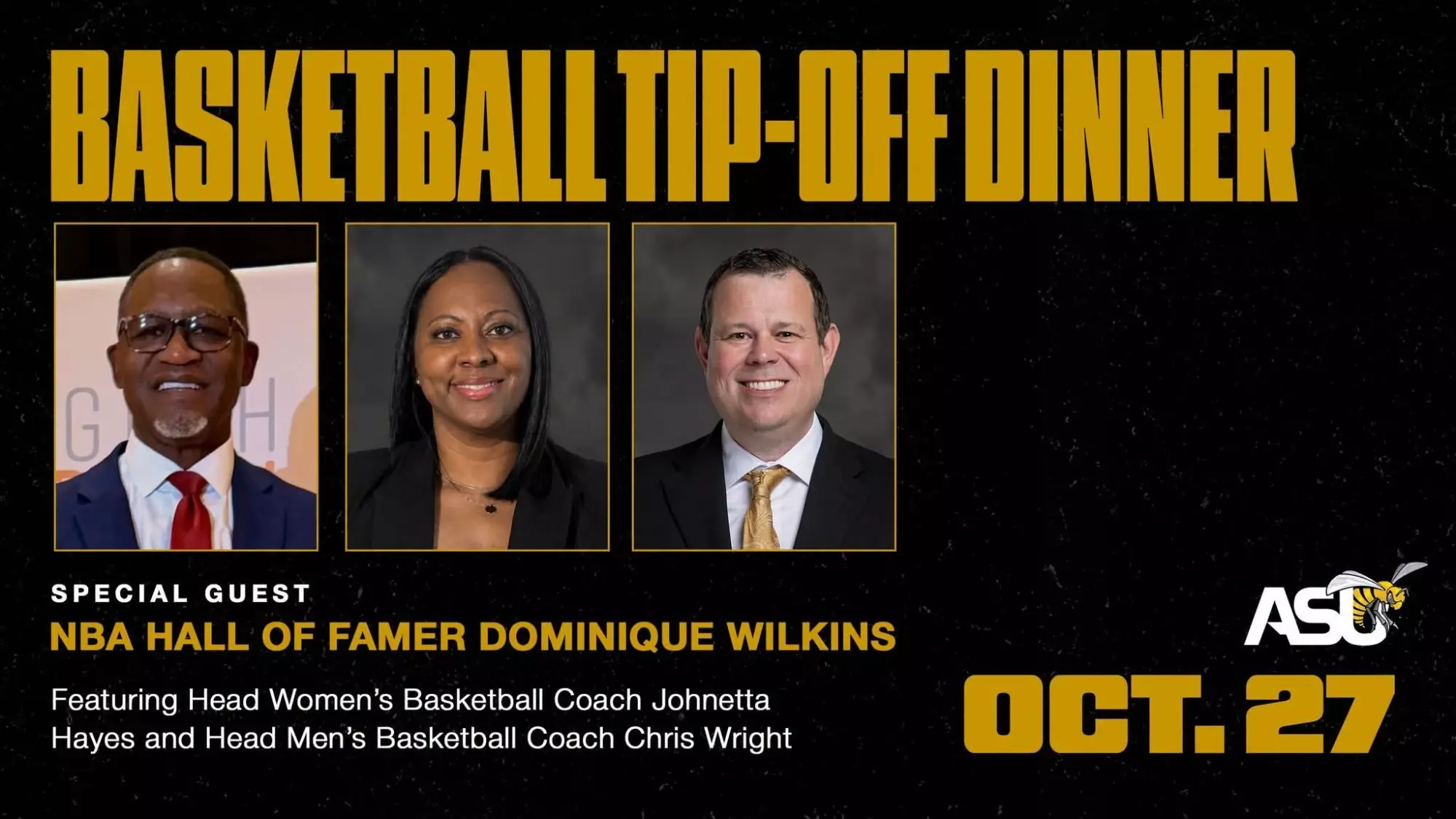
The annual celebration will bring Hornet supporters together to benefit the Hornet NIL Fund.
MONTGOMERY, Ala. — Basketball Hall of Famer Dominique Wilkins is coming to Alabama State University as the featured guest for the 2026 Basketball Tip-Off Dinner, now scheduled for Tuesday, October 27, at 7 p.m.
The event will take place at the John Garrick Hardy Student Center on campus, with proceeds benefiting the Hornet NIL Fund.
The annual dinner gives alumni, students, fans and members of the Montgomery community an opportunity to celebrate Alabama State basketball while supporting the program. Wilkins’ appearance adds another prominent basketball name to the gathering following last year’s sold-out dinner featuring Penny Hardaway and Cynthia Cooper.
This year’s event will continue that tradition, bringing supporters together ahead of the basketball season and highlighting the university’s athletic history.
Alumni, local businesses and community members are encouraged to purchase tickets early following the strong turnout for last year’s celebration.
Event Details
- Date: Tuesday, October 27, 2026
- Time: 7 p.m.
- Location: John Garrick Hardy Student Center, Alabama State University
- Special guest: Dominique Wilkins
- Proceeds benefit: Hornet NIL Fund
Tags: Alabama State University, Alabama State Hornets, Dominique Wilkins, HBCU Basketball, Hornet NIL Fund, Basketball Tip-Off Dinner, SWAC Basketball, HBCU Sports, Montgomery Alabama, College Basketball, HBCU Original, Alabama State Athletics, 2026 Basketball Season
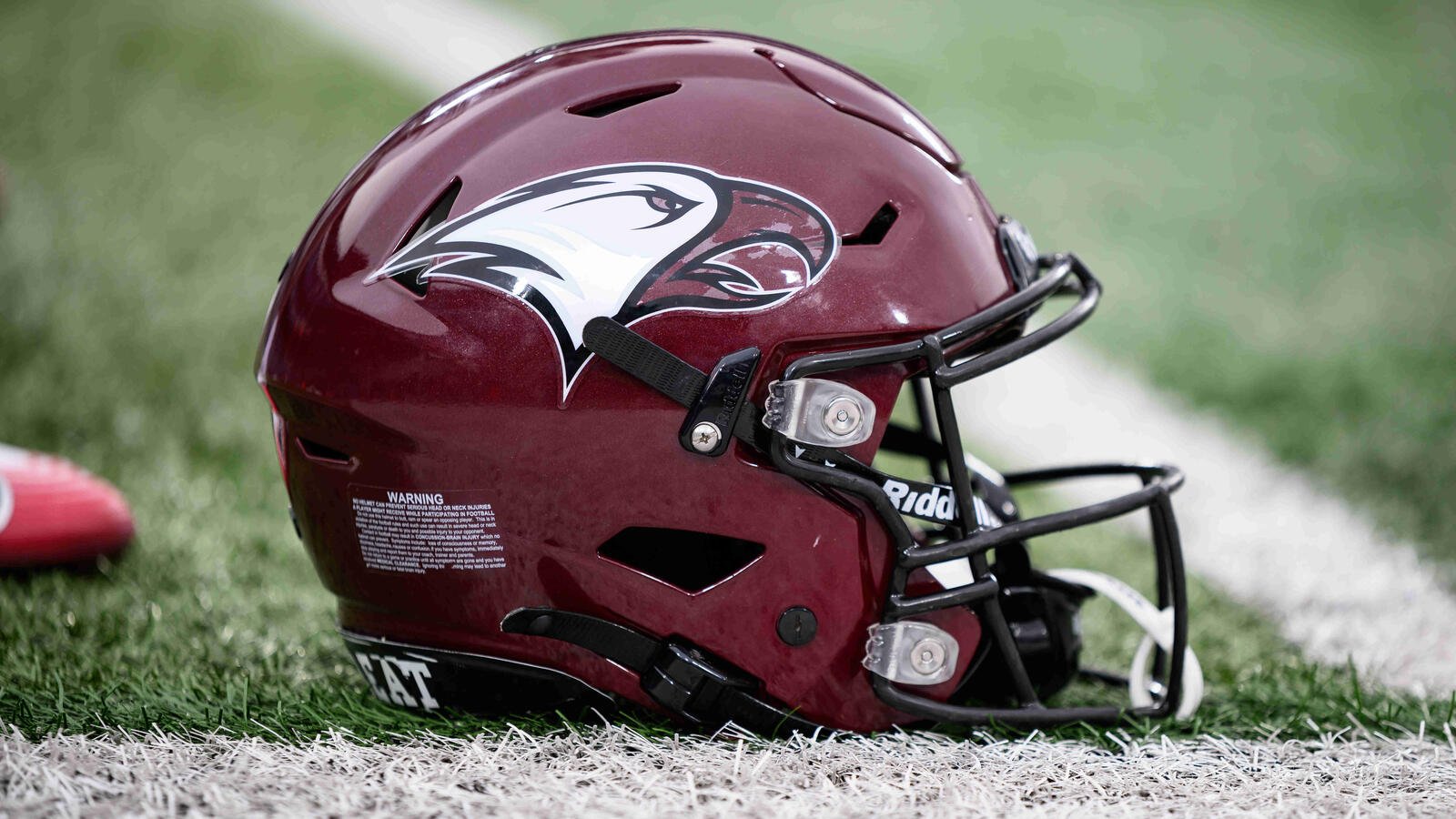
The Eagles look to snap a four-game losing streak, while the Hornets aim for a second straight victory over NCCU.
DOVER, Del. — North Carolina Central gets a fresh start in the conference race Friday when the Eagles visit Delaware State for their Mid-Eastern Athletic Conference opener. Kickoff is scheduled for 5 p.m., with national television coverage on ESPN2.
NCCU enters at 2–5 after a difficult finish to its non-conference schedule. Delaware State stands at 4–3 in its second season under head coach DeSean Jackson, setting up a matchup between teams picked to finish near the top of the MEAC.
The Eagles were selected second in the preseason conference poll behind defending champion South Carolina State. Delaware State received two first-place votes and was picked third.
Friday marks the 32nd meeting between the programs in a series that began in 1945. NCCU holds a 23–8 advantage and has won 10 of the last 12 matchups. Delaware State, however, took last season’s meeting 35–26 at O’Kelly-Riddick Stadium, handing Eagles head coach Trei Oliver his first loss to the Hornets in six tries.
NCCU will look to carry its improved rushing production into conference play. Despite falling 17–14 to William & Mary during homecoming on October 10, the Eagles rushed for a season-high 282 yards.
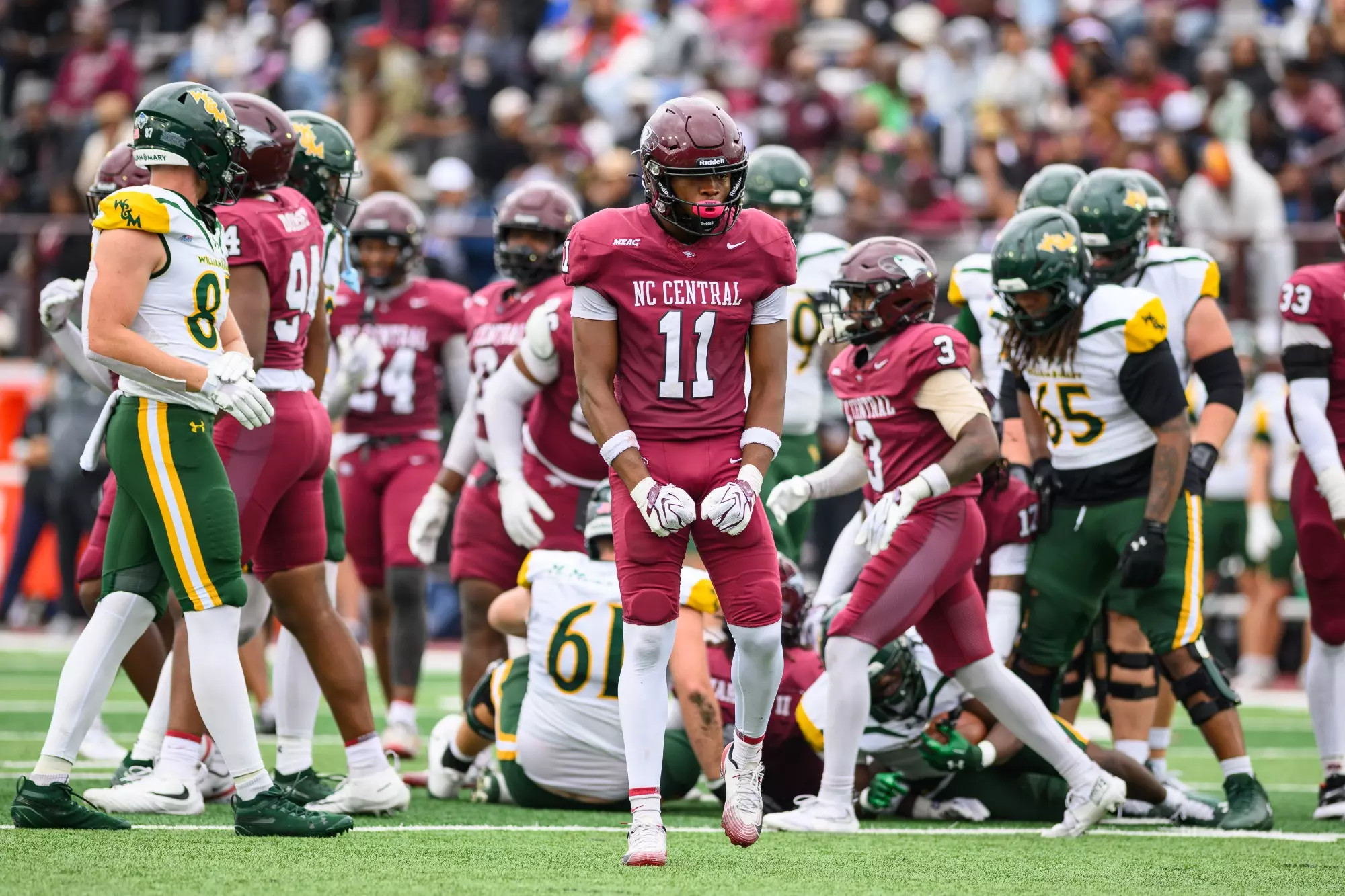
Running back Gino Addison led the way with 169 yards on 22 carries. Quarterback Cobey Thompkins added 98 rushing yards, including a 68-yard touchdown run in the third quarter. The production kept NCCU within reach, but the Eagles were unable to avoid their fourth consecutive defeat.
Conference play has traditionally brought success under Oliver. NCCU is 22–11 against MEAC opponents during his tenure, including four consecutive 4–1 league finishes from 2021 through 2024. The Eagles went 3–2 in conference play last season.
Oliver also guided NCCU to the 2022 MEAC championship and a Celebration Bowl victory over Jackson State. Now in his seventh season leading his alma mater, he is the MEAC’s longest-tenured head coach and the longest-serving current head coach in HBCU Division I football.
Winning away from home will be another important part of the Eagles’ push. NCCU is 18–19 on the road under Oliver after its September 26 loss at East Carolina. The program finished .500 or better away from home in each of the previous three seasons, including a 5–1 road record last year.
Delaware State enters Friday following a 34–0 victory over Franklin Pierce on October 10. The Hornets have alternated wins and losses throughout the season and will try to put together consecutive victories against an opponent they defeated a year ago.
Quarterback Ui Ale leads the Hornets’ offense, ranking second in the MEAC with 175 passing yards per game. He has thrown for 1,050 yards and four touchdowns while completing nearly 61 percent of his passes. Ale also contributes 42.5 rushing yards per game, giving Delaware State another option on the ground.
Defensively, safety Kemari Nix ranks second in the conference with 47 tackles, averaging 6.7 per game. His production includes 7.5 tackles for loss and 1.5 sacks.
Jackson’s first season established a higher standard for the Hornets. Delaware State won eight games and finished 4–1 in the MEAC in 2025, producing the program’s best season since 2007. The former NFL receiver is now working to turn that breakthrough into sustained success.
For NCCU, Friday offers a chance to end its losing streak and begin the conference schedule with a victory. For Delaware State, it is an opportunity to build momentum and earn another win over a familiar MEAC contender.
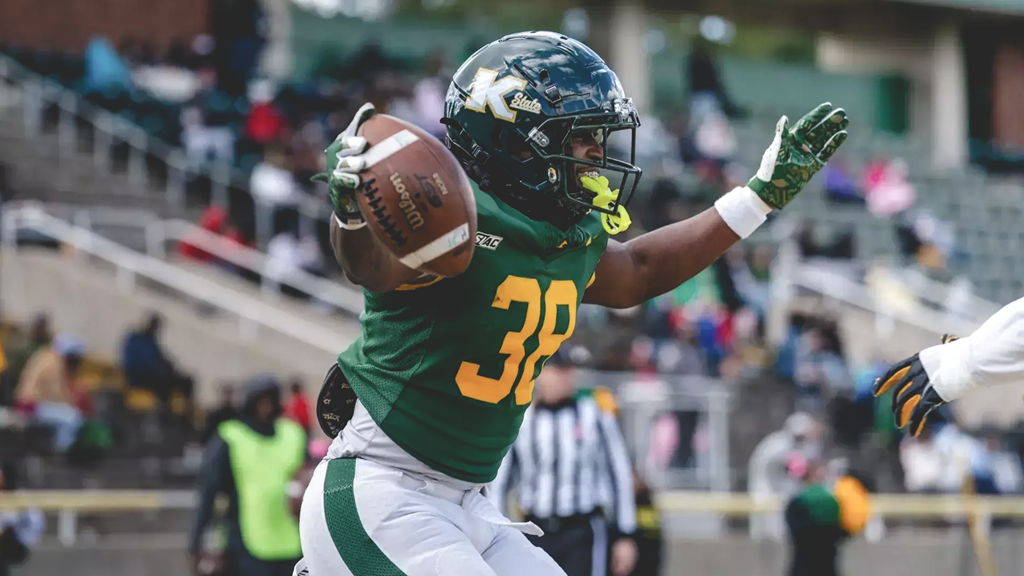
Conference contenders look to protect their positions as homecoming celebrations, rivalry rematches and postseason stakes headline October 24.
ATLANTA — The race for position in the Southern Intercollegiate Athletic Conference is tightening, and Saturday’s six-game schedule could bring another shakeup as teams push toward the finish of the regular season.
Benedict heads to Albany State looking to build on a major victory, Kentucky State hosts Savannah State with momentum on its side, and Edward Waters returns home seeking a response after its first conference loss. Central State and Miles meet after a week off, while Fort Valley State welcomes Lane and Tuskegee travels to Allen.
According to the SIAC’s Week 8 release, Edward Waters, Kentucky State and Benedict hold the top three spots in the initial NCAA Division II Super Region Two NPI rankings. Central State sits eighth, adding another conference program to the region’s top 10.
With several contenders closely grouped in the conference race, Saturday offers opportunities to gain ground and little room for costly mistakes.
Benedict Looks to Break Through Against Albany State
Benedict enters its road matchup at Albany State with a 6–1 overall record and a 4–1 conference mark after defeating Edward Waters 45–24. The Tigers rushed for 238 yards in that victory, handing Edward Waters its first SIAC loss of the season.
Now comes a matchup with a program that repeatedly stood in Benedict’s way last year. Albany State defeated the Tigers three times in 2025, including wins in the SIAC Championship Game and the NCAA Division II playoffs.
The Golden Rams enter Saturday at 3–4 overall and 3–2 in conference play following a 17–14 loss to Tuskegee. Their defense will face a Benedict rushing attack averaging 210.1 yards per game, led by David Smith, Christopher Johnson and A’chean Durant.
Albany State quarterback Jeffery Davis has thrown for 1,294 yards and seven touchdowns without an interception. Protecting him against a Benedict defense allowing just 18.3 points per game will be essential as the Golden Rams try to deliver a Senior Day victory.
Kickoff is scheduled for 1 p.m. ET on ESPN+.
Kentucky State Aims to Keep Rolling on Senior Day
Kentucky State has outscored its last two opponents 101–22 and enters Saturday’s home game against Savannah State at 6–2 overall and 5–1 in the SIAC.
The Thorobreds followed a 46–0 win over Miles with a 55–22 victory against Lane. Quarterback Juan Gainous has thrown for 1,526 yards and 12 touchdowns with only one interception, while receiver Darius Cyprian leads the receiving corps with 51 catches for 766 yards and seven scores.
Savannah State, now 1–6 overall and 1–5 in conference play, is looking to turn sustained drives into touchdowns. The Tigers rushed for 162 yards and controlled possession for more than 35 minutes against Fort Valley State last week, but three field goals accounted for all their scoring in a 22–9 loss.
Kentucky State won last season’s meeting 37–20 and leads the series 7–6. Saturday’s Senior Day game begins at 1 p.m. ET on the SIAC Network.
Fort Valley State Hosts Lane During Homecoming
Fort Valley State returns home with a chance to earn consecutive victories after beating Savannah State 22–9.
The Wildcats, 2–4 overall and 1–3 in the SIAC, scored the final 14 points of that game while holding Savannah State without a touchdown. They now welcome a winless Lane team for homecoming and a Gold Out at Wildcat Stadium.
Lane enters at 0–8 overall and 0–6 in conference play amid a leadership change. Head coach Stanley Conner stepped down October 20, and athletic director Jeremy C. Patterson will serve as interim head coach for the remainder of the season.
Patterson previously worked as Lane’s defensive coordinator and linebackers coach. His first assignment is helping the Dragons regroup against a Fort Valley State team that won last year’s meeting 23–19.
Kickoff is set for 1 p.m. ET on the SIAC Network.
Tuskegee Seeks Another Win as Allen Celebrates Its Seniors
Tuskegee and Allen arrive at Saturday’s matchup after very different endings to their previous games.
The Golden Tigers improved to 3–4 overall and 3–2 in the SIAC when Bryson McGrew connected with Ean Nation for a 13-yard touchdown with 2:51 remaining to defeat Albany State 17–14.
Allen suffered a 17–14 loss to Clark Atlanta after allowing the winning touchdown with 15 seconds left. The Yellow Jackets enter at 2–5 overall and 1–4 in conference play.
Finishing scoring opportunities will be a priority for Allen, which reached the red zone four times against Clark Atlanta but scored on only two of those possessions. Tuskegee will look for another strong defensive performance after recording four sacks and 10 tackles for loss against Albany State.
Allen has won three of the last four meetings, including a 28–13 victory last season. Saturday’s Senior Day game begins at 2 p.m. ET at Westwood High School in Columbia, South Carolina, with coverage on the SIAC Network.
Edward Waters Looks to Respond Against Clark Atlanta
Edward Waters returns to Jacksonville for homecoming determined to recover from its 45–24 loss at Benedict.
The Tigers remain firmly in the conference race at 5–2 overall and 4–1 in SIAC play. Quarterback Tavion Faulk threw for 349 yards and two touchdowns last week, but Edward Waters could not overcome a 35–3 halftime deficit.
Clark Atlanta arrives at 2–5 overall and 2–3 in the conference after ending a four-game losing streak against Allen. Dae’Jeaun Dennis scored the winning touchdown in the closing seconds, while Trayvon Pinder rushed for 96 yards and a score.
The Panthers’ ability to run the football and sustain possessions could be critical against Edward Waters’ productive passing attack. For the Tigers, a stronger defensive start will be a priority after surrendering 238 rushing yards at Benedict.
Edward Waters won last season’s matchup 28–27. Saturday’s game begins at 2 p.m. ET on the SIAC Network.
Central State and Miles Return From Byes With Plenty at Stake
Central State brings a four-game conference winning streak into Fairfield, where Miles will try to bounce back from its shutout loss to Kentucky State.
Both teams were idle last weekend. Central State enters at 4–3 overall and 4–1 in the SIAC, while Miles stands at 3–4 and 3–2.
Quarterback Jackson Wasik has fueled Central State’s offense with 2,033 passing yards and 23 touchdowns against just three interceptions. In the Marauders’ most recent game, he threw for 319 yards and four touchdowns in a 27–19 win over Tuskegee.
Miles will need to protect the football after committing four turnovers in its 46–0 loss to Kentucky State. Its secondary could also play a major role against Wasik, with Antonio White Jr. leading the Golden Bears with three interceptions.
Last season, Miles erased a 21–0 halftime deficit to defeat Central State 28–24. The Marauders now have an opportunity to reverse that result and strengthen their position before upcoming games against Edward Waters and Benedict.
Kickoff is scheduled for 3 p.m. ET, 2 p.m. CT, on ESPN+.
-

 Campus1 month ago
Why Major Artists Are Cancelling Concerts and Tours in 2026
-
 Campus2 months ago
SIAC Mourns the Loss of Benedict Director of Athletics, Hall of Famer Willie Washington
-
 Campus1 month ago
Albany State University Receives Tara VanDerveer Fund for the Advancement of Women in Coaching Grant
-
 Sports2 weeks ago
Jackson State Takes No. 1 as Morgan State Climbs in HBCU Football Poll
-

 Sports2 weeks ago
HBCU Original’s Cross Country Watch List: 25 Runners Making Their Mark This Fall
-
 Sports2 weeks ago
HBCU Cross Country Championship Season Is Coming: Dates and Locations for Five Conferences
-
 Sports2 weeks ago
Howard Holds Off Delaware State for First Home Volleyball Win
-
 Sports2 weeks ago
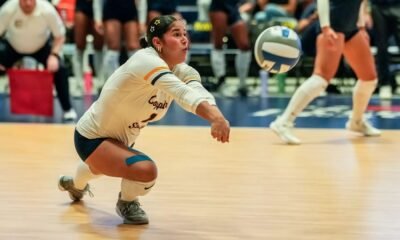
Coppin State Extends Winning Streak as Howard and Delaware State Make Moves in MEAC Volleyball