



Connect with us

Campus

Celebrating Leadership: Presidents of America’s Esteemed HBCUs

HBCU ORIGINAL

Published

on

Historically Black Colleges and Universities (HBCUs) have been pillars of higher education, culture, and community for over a century. Their presidents play crucial roles in steering these institutions toward success, fostering innovation, and preserving the rich legacy of HBCUs. Today, we highlight the visionary leaders at the helm of these distinguished schools.

Alabama A&M University
Location: Normal, Alabama
President: Dr. Daniel K. WimsAlabama State University
Location: Montgomery, Alabama
President: Dr. Quinton T. Ross, Jr.

Albany State University
Location: Albany, Georgia
President: Dr. Marion Ross Fedrick

Alcorn State University
Location: Lorman, Mississippi
President: Dr. Felecia M. Nave

Allen University
Location: Columbia, South Carolina
President: Dr. Ernest McNealey

American Baptist College
Location: Nashville, Tennessee
President: Dr. Forrest E. Harris, Sr.

University of Arkansas at Pine Bluff
Location: Pine Bluff, Arkansas
Chancellor: Dr. Laurence B. Alexander

Arkansas Baptist College
Location: Little Rock, Arkansas
President: Dr. Carlos R. Clark

Barber-Scotia College
Location: Concord, North Carolina
Interim President: Dr. David Olah

Benedict College
Location: Columbia, South Carolina
President: Dr. Roslyn Clark Artis

Bennett College
Location: Greensboro, North Carolina
President: Dr. Suzanne Walsh

Bethune-Cookman University
Location: Daytona Beach, Florida
President: Dr. Lawrence M. Drake II

Bishop State Community College
Location: Mobile, Alabama
President: Dr. Olivier Charles

Bluefield State College
Location: Bluefield, West Virginia
President: Dr. Robin C. Capehart

Bowie State University
Location: Bowie, Maryland
President: Dr. Aminta H. Breaux

Carver College
Location: Atlanta, Georgia
President: Dr. Robert Crummie

Central State University
Location: Wilberforce, Ohio
President: Dr. Jack Thomas

Cheyney University of Pennsylvania
Location: Cheyney, Pennsylvania
President: Dr. Aaron A. Walton

Claflin University
Location: Orangeburg, South Carolina
President: Dr. Dwaun J. Warmack

Clark Atlanta University
Location: Atlanta, Georgia
President: Dr. George T. French, Jr.

Clinton College
Location: Rock Hill, South Carolina
President: Dr. Lester A. McCorn

Coahoma Community College
Location: Clarksdale, Mississippi
President: Dr. Valmadge Towner

Coppin State University
Location: Baltimore, Maryland
President: Dr. Anthony L. Jenkins

Delaware State University
Location: Dover, Delaware
President: Dr. Tony Allen

Denmark Technical College
Location: Denmark, South Carolina
President: Dr. Willie L. Todd, Jr.

Dillard University
Location: New Orleans, Louisiana
President: Dr. Rochelle Ford

University of the District of Columbia
Location: Washington, D.C.
President: Dr. Ronald Mason, Jr.

Edward Waters University
Location: Jacksonville, Florida
President: Dr. A. Zachary Faison, Jr.

Elizabeth City State University
Location: Elizabeth City, North Carolina
Chancellor: Dr. Karrie G. Dixon

Fayetteville State University
Location: Fayetteville, North Carolina
Chancellor: Dr. Darrell T. Allison

Fisk University
Location: Nashville, Tennessee
President: Dr. Vann R. Newkirk, Sr.

Florida A&M University
Location: Tallahassee, Florida
President: Dr. Larry Robinson

Florida Memorial University
Location: Miami Gardens, Florida
President: Dr. Jaffus Hardrick

Fort Valley State University
Location: Fort Valley, Georgia
President: Dr. Paul Jones

Gadsden State Community College (Valley Street campus)
Location: Gadsden, Alabama
President: Dr. Kathy L. Murphy

Grambling State University
Location: Grambling, Louisiana
President: Dr. Rick Gallot

Hampton University
Location: Hampton, Virginia
President: Dr. Darrell K. Williams

Harris-Stowe State University
Location: St. Louis, Missouri
President: Dr. LaTonia Collins Smith

Hinds Community College at Utica
Location: Utica, Mississippi
President: Dr. Stephen Vacik

Howard University
Location: Washington, D.C.
President: Dr. Wayne A. I. Frederick

Huston-Tillotson University
Location: Austin, Texas
President: Dr. Melva K. Williams

Interdenominational Theological Center
Location: Atlanta, Georgia
President: Dr. Matthew Wesley Williams

J. F. Drake State Technical College
Location: Huntsville, Alabama
President: Dr. Patricia Sims

Jackson State University
Location: Jackson, Mississippi
President: Dr. Elayne Hayes-Anthony (Interim)

Jarvis Christian University
Location: Hawkins, Texas
President: Dr. Lester C. Newman

Johnson C. Smith University
Location: Charlotte, North Carolina
President: Dr. Clarence D. Armbrister

Kentucky State University
Location: Frankfort, Kentucky
President: Dr. M. Christopher Brown II (Interim)

Knoxville College
Location: Knoxville, Tennessee
President: Dr. Leonard Adams (Interim)

Lane College
Location: Jackson, Tennessee
President: Dr. Logan Hampton

Langston University
Location: Langston, Oklahoma
President: Dr. Kent J. Smith, Jr.

Lawson State Community College
Location: Birmingham, Alabama
President: Dr. Cynthia Anthony

LeMoyne-Owen College
Location: Memphis, Tennessee
President: Dr. Vernell Bennett-Fairs

The Lincoln University
Location: Lincoln University, Pennsylvania
President: Dr. Brenda A. Allen

Lincoln University
Location: Jefferson City, Missouri
President: Dr. John B. Moseley

Livingstone College
Location: Salisbury, North Carolina
President: Dr. Jimmy R. Jenkins, Sr.

University of Maryland Eastern Shore
Location: Princess Anne, Maryland
President: Dr. Heidi M. Anderson

Meharry Medical College
Location: Nashville, Tennessee
President: Dr. James E. K. Hildreth

Miles College
Location: Fairfield, Alabama
President: Dr. Bobbie Knight

Mississippi Valley State University
Location: Itta Bena, Mississippi
President: Dr. Jerryl Briggs

Morehouse College
Location: Atlanta, Georgia
President: Dr. David A. Thomas

Morehouse School of Medicine
Location: Atlanta, Georgia
President: Dr. Valerie Montgomery Rice

Morgan State University
Location: Baltimore, Maryland
President: Dr. David Wilson

Morris Brown College
Location: Atlanta, Georgia
President: Dr. Kevin James

Morris College
Location: Sumter, South Carolina
President: Dr. Leroy Staggers

Norfolk State University
Location: Norfolk, Virginia
President: Dr. Javaune Adams-Gaston

North Carolina A&T State University
Location: Greensboro, North Carolina
Chancellor: Dr. Harold L. Martin, Sr.

North Carolina Central University
Location: Durham, North Carolina
Chancellor: Dr. Johnson O. Akinleye

Oakwood University
Location: Huntsville, Alabama
President: Dr. Leslie N. Pollard

Paine College
Location: Augusta, Georgia
President: Dr. Cheryl Evans Jones

Paul Quinn College
Location: Dallas, Texas
President: Dr. Michael J. Sorrell

Philander Smith College
Location: Little Rock, Arkansas
President: Dr. Roderick L. Smothers, Sr.

Prairie View A&M University
Location: Prairie View, Texas
President: Dr. Ruth J. Simmons (Interim)

Rust College
Location: Holly Springs, Mississippi
President: Dr. Ivy R. Taylor

Savannah State University
Location: Savannah, Georgia
President: Dr. Kimberly Ballard-Washington

Selma University
Location: Selma, Alabama
President: Dr. Stanford E. Angion

Shaw University
Location: Raleigh, North Carolina
President: Dr. Paulette Dillard

Shelton State Community College (C.A. Fredd Campus)
Location: Tuscaloosa, Alabama
President: Dr. Chris Cox

Shorter College
Location: North Little Rock, Arkansas
President: Dr. O. Jerome Green

Simmons College of Kentucky
Location: Louisville, Kentucky
President: Dr. Kevin W. Cosby

South Carolina State University
Location: Orangeburg, South Carolina
President: Dr. Alexander Conyers

Southern University at New Orleans
Location: New Orleans, Louisiana
Chancellor: Dr. James H. Ammons, Jr.

Southern University at Shreveport
Location: Shreveport, Louisiana
Chancellor: Dr. Rodney Ellis

Southern University and A&M College
Location: Baton Rouge, Louisiana
President-Chancellor: Dr. Dennis J. Shields

Southwestern Christian College
Location: Terrell, Texas
President: Dr. Ervin D. Seamster, Jr.

Spelman College
Location: Atlanta, Georgia
President: Dr. Helene Gayle

St. Augustine’s University
Location: Raleigh, North Carolina
President: Dr. Christine Johnson McPhail

St. Philip’s College
Location: San Antonio, Texas
President: Dr. Adena Williams Loston

Stillman College
Location: Tuscaloosa, Alabama
President: Dr. Cynthia Warrick

Talladega College
Location: Talladega, Alabama
President: Dr. Gregory J. Vincent

Tennessee State University
Location: Nashville, Tennessee
President: Dr. Glenda Glover

Texas College
Location: Tyler, Texas
President: Dr. Dwight J. Fennell

Texas Southern University
Location: Houston, Texas
President: Dr. Lesia L. Crumpton-Young

Tougaloo College
Location: Tougaloo, Mississippi
President: Dr. Carmen J. Walters

H. Councill Trenholm State Community College
Location: Montgomery, Alabama
President: Dr. Kemba Chambers

Tuskegee University
Location: Tuskegee, Alabama
President: Dr. Charlotte P. Morris

University of the Virgin Islands
Location: St. Thomas and St. Croix, U.S. Virgin Islands
President: Dr. David Hall

Virginia State University
Location: Petersburg, Virginia
President: Dr. Makola M. Abdullah

Virginia Union University
Location: Richmond, Virginia
President: Dr. Hakim J. Lucas

Virginia University of Lynchburg
Location: Lynchburg, Virginia
President: Dr. Kathy Franklin

Voorhees University
Location: Denmark, South Carolina
President: Dr. Ronnie Hopkins

West Virginia State University
Location: Institute, West Virginia
President: Dr. Ericke S. Cage

Wilberforce University
Location: Wilberforce, Ohio
President: Dr. Elfred Anthony Pinkard

Wiley University
Location: Marshall, Texas
President: Dr. Herman J. Felton, Jr.

Winston-Salem State University
Location: Winston-Salem, North Carolina
Chancellor: Dr. Elwood L. Robinson

Xavier University of Louisiana
Location: New Orleans, Louisiana
President: Dr. Reynold Verret


Fun Facts About HBCUs You Might Not Know

The legacy of HBCUs is rich with history, culture, and achievements. Here are some cool facts about a few of these remarkable institutions:

Howard University

  • Did You Know? Howard University is often referred to as “The Mecca” because of its pivotal role in African American culture and history. It has produced more African American Ph.D. holders than any other university in the world.

Spelman College

  • Did You Know? Spelman College is the oldest historically Black college for women in America. It was originally founded as the Atlanta Baptist Female Seminary in 1881 and later became Spelman College in 1924.

Tuskegee University

  • Did You Know? Tuskegee University is home to the famous Tuskegee Airmen, the first African American military aviators in the U.S. Armed Forces. The university also has a National Historic Site, the Tuskegee Institute National Historic Site, on its campus.

Morehouse College

  • Did You Know? Morehouse College is the only HBCU dedicated exclusively to the education of African American men. Among its notable alumni are Dr. Martin Luther King Jr., filmmaker Spike Lee, and actor Samuel L. Jackson.

Florida A&M University (FAMU)

  • Did You Know? FAMU has one of the top-ranked public pharmacy schools in the nation. The university’s Marching “100” band is also world-renowned and has performed in venues like the Super Bowl and the Grammy Awards.

Xavier University of Louisiana

  • Did You Know? Xavier University of Louisiana produces more African American students who go on to complete medical school than any other college in the U.S.

Lincoln University (PA)

  • Did You Know? Lincoln University is the first degree-granting HBCU in the United States, founded in 1854. Notable alumni include Langston Hughes, Thurgood Marshall, and Kwame Nkrumah, the first president of Ghana.

North Carolina A&T State University

  • Did You Know? North Carolina A&T State University is the largest HBCU in the United States by enrollment. It is also known for its powerful engineering programs and is one of the top producers of African American engineers in the country.

Hampton University

  • Did You Know? Hampton University owns the largest free-standing proton therapy cancer treatment center in the world, the Hampton University Proton Therapy Institute.

Bethune-Cookman University

  • Did You Know? Founded by Dr. Mary McLeod Bethune with just $1.50 and a mission to educate African American girls, Bethune-Cookman University has grown into one of the most respected HBCUs in the nation.

We are dedicated to celebrating the rich history, vibrant culture, and enduring legacy of Historical Black Colleges and Universities (HBCUs). Our mission is to provide a platform that honors the invaluable contributions of HBCUs to higher education, social justice, and community empowerment. Through insightful articles, engaging narratives, and meaningful dialogue, we strive to amplify the voices, experiences, and achievements within the HBCU community. By fostering awareness, appreciation, and support for HBCUs, we aspire to inspire current and future generations to pursue excellence, equity, and inclusivity in education and beyond.

Campus

Howard Alumnus Chequan Lewis Takes the Helm as CEO of Crunch Fitness

HBCU ORIGINAL

Published

on

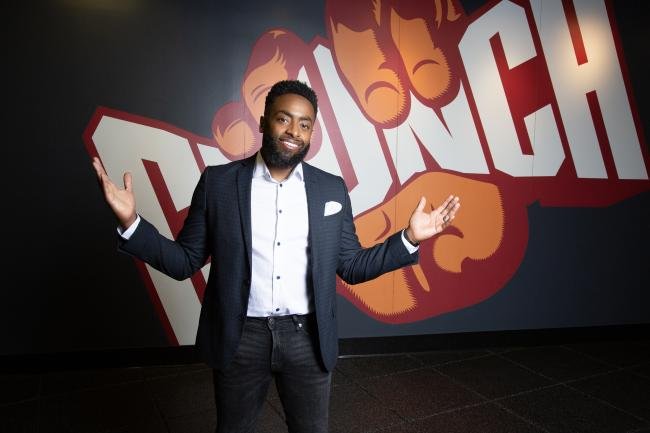
Former Mister Howard Chequan Lewis is bringing lessons in leadership, ambition and legacy from Howard University into his new role leading one of the world’s largest fitness brands.

Howard University alumnus Chequan Lewis has reached another major milestone in a career that has taken him from Washington, D.C. classrooms to executive leadership.

Lewis, a 2005 Howard graduate, has been named CEO of Crunch Fitness after previously serving as the company’s president. He now leads a global fitness organization with more than 550 locations and millions of members around the world.

It is a path Lewis admits he did not originally picture for himself.

When he graduated from Howard, Lewis had his sights set on politics and even dreamed of one day becoming President of the United States. Business leadership was not part of his original plan.

Still, the same ambition that pushed him toward politics eventually helped him build a career that included leadership roles at Pizza Hut and Crunch Fitness.

For Lewis, Howard University played a major role in preparing him to take advantage of opportunities he could not have predicted.

From Howard to Corporate Leadership

Lewis studied political science and economics at Howard, where he built an impressive record as a student.

During his time on campus, he served as Mister Howard, participated in student government, became a member of Alpha Phi Alpha Fraternity, Inc., and graduated with a perfect GPA.

He credits the university with teaching him not to place limits on what he could accomplish.

That mindset became important as his career moved in directions far different from what he imagined as a college student.

Lewis later attended Harvard Law School before building experience in business and corporate leadership. He began his professional career at McMaster Carr Supply Company before eventually joining Pizza Hut U.S.

At Pizza Hut, Lewis served as chief operating officer and also became the company’s first chief equity officer. His responsibilities included operations, workplace culture, talent development and community impact.

Those experiences eventually helped lead Lewis to Crunch Fitness.

He joined Crunch as president in 2024 and helped oversee a major period of expansion for the company. Crunch grew into a systemwide business valued at approximately $1.5 billion before Lewis moved into the CEO position.

Building the Next Chapter of Crunch Fitness

As CEO, Lewis is responsible for the overall direction of Crunch Fitness.

His responsibilities include operations, branding, marketing, member experience, franchise relationships, innovation and global expansion.

Crunch currently operates clubs in the United States and international markets including Australia, Canada, Costa Rica and India.

Lewis expects the company to continue expanding rapidly, with hundreds of additional locations possible in the coming years.

But his vision goes beyond simply opening more gyms.

Lewis wants Crunch to become a brand that plays a meaningful role in people’s lives.

For him, fitness centers can become places where people improve their health, gain confidence, find employment opportunities and begin working toward a better version of themselves.

That larger purpose is something Lewis considers central to the next stage of Crunch’s growth.

Howard Remains at the Center of His Story

Although Lewis later attended Harvard, he continues to describe Howard as the institution that had the greatest influence on the leader he became.

Howard gave him more than an education.

It exposed him to Black history, culture, achievement and leadership while surrounding him with people who pushed him academically and personally.

Lewis has said the leadership qualities he carries today were shaped primarily by his family, his faith and Howard University.

His connection to the university remains strong.

In 2024, Lewis returned to Howard’s School of Business as part of its Executive Lecture Series. His presentation, Legendary: Powered by Legacy, gave him an opportunity to speak directly with students sitting in the same classrooms and walking the same campus he once did.

The moment carried special meaning because Lewis remembered visiting the School of Business as an undergraduate.

Although he was not a business student, he would notice the photographs of executives and business leaders displayed as part of the school’s Executive Lecture Series.

Years later, Lewis returned as one of the leaders invited to share his own journey.

For Lewis, leadership is also connected to what a person leaves behind.

He views legacy as more than what previous generations provide. It also includes what today’s leaders create and pass to the people coming behind them.

Choosing Howard

Lewis’ connection with Howard began before he ever arrived in Washington.

He grew up in an HBCU family with strong ties to Tougaloo College in Mississippi, where his parents met.

Many members of his family expected him to continue that tradition.

Lewis chose another direction.

His interest in politics attracted him to Washington, D.C., while Howard’s history attracted him to the university itself.

The accomplishments of Howard figures such as Thurgood Marshall, Charles Hamilton Houston, Andrew Young and Donny Hathaway helped Lewis see the university as a place where he could become the person he wanted to be.

As a top student coming out of Haltom High School in Texas, Lewis had several academic options. Still, he believed Howard was the right place to begin his college journey.

Looking back, he considers choosing Howard at 17 years old one of the most important decisions of his life.

A Message for the Next Generation

Lewis now uses his platform to encourage young people and future leaders to think beyond the careers they currently imagine.

His own journey demonstrates why.

The political science and economics student who once dreamed about running the country eventually became the leader of a billion dollar fitness organization.

Lewis encourages students to dream big while also developing the skills needed to turn opportunity into results.

He emphasizes preparation, authenticity, humility, intentional leadership and substance.

He also challenges younger leaders to aim beyond the accomplishments of the people they admire.

For Howard students, Lewis’ career represents another example of how an HBCU experience can prepare graduates to lead across industries they may never have originally considered.

His career has taken him from Howard University to Harvard Law School, Pizza Hut and now the top position at Crunch Fitness.

Through every chapter, Howard remains part of the foundation.

And as Lewis begins his tenure as CEO, his story continues to show that the path from an HBCU campus can lead almost anywhere.

Continue Reading

Campus

HBCU Athletic Conference Celebrates 988 Student-Athletes on 2025–26 Commissioner’s Honor Roll

HBCU ORIGINAL

Published

on

Continue Reading

Campus

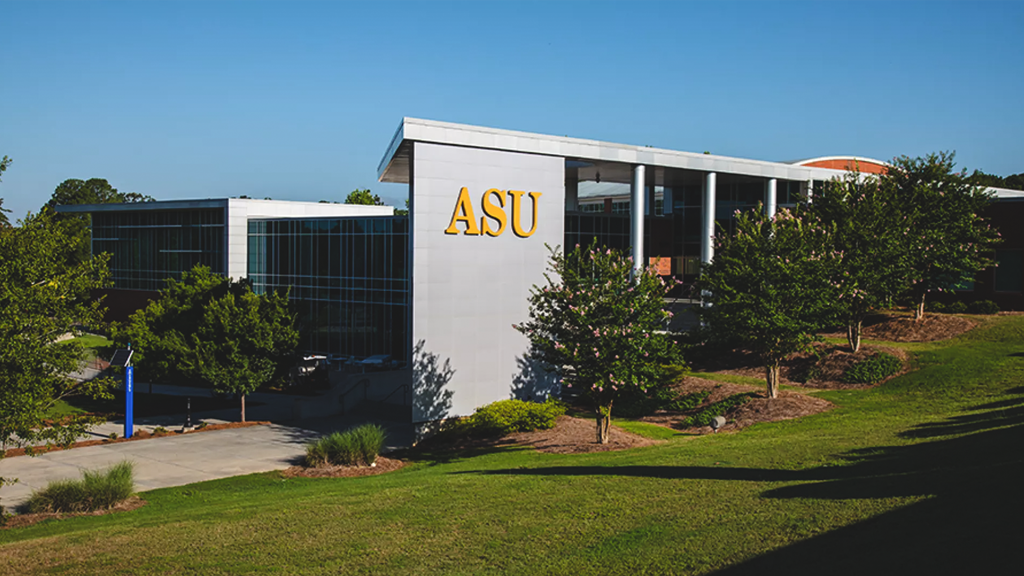
Alabama State Receives Reduced NCAA Infractions Ruling, Will Serve Three Years of Probation

HBCU ORIGINAL

Published

on

Alabama State University’s long-running NCAA infractions case ended with a reduced classification after the NCAA Division I Committee on Infractions ruled the matter as a Level I Mitigated case instead of the more severe aggravated designation.

The decision carries the minimum financial penalty allowed for a Level I violation: a $30,000 fine plus one percent of the football program’s budget, along with three years of probation. University officials said they accept the ruling and will not file an appeal, though they remain convinced the case never warranted one of the NCAA’s highest classifications.

“This confirms what we have maintained from the outset — this case was improperly elevated,” Alabama State representative Dr. Jason Cable said. “The underlying conduct, tied to the former Sports Information Director and head coach, simply does not justify placement among the most severe cases in collegiate athletics.”

The case centered on the alteration of competition statistics for one student-athlete during the 2019 football season. Alabama State acknowledged that a former sports information director changed the athlete’s statistics on the school’s athletics website, allegedly at the direction of the former head football coach.

However, after a contested hearing, the NCAA Committee on Infractions determined there was not enough evidence to hold the former coach personally responsible for directing the changes. Alabama State said its acceptance of responsibility was based solely on the actions of its employee and not on any finding against the former coach.

University officials also emphasized that the NCAA found no lack of institutional control or failure to monitor within the athletics department.

Despite the reduced classification, Alabama State President Dr. Quinton T. Ross Jr. questioned the consistency of the NCAA’s enforcement process.

“While today’s decision is a downgrade from the Level I aggravated classification, we still believe that the scope of the penalty does not reflect the university’s involvement, or lack thereof, in this matter,” Ross said.

Ross pointed to what he called a significant disparity between Alabama State’s penalties and those issued to the University of Arizona. According to the university, Arizona, which certified the student-athlete’s eligibility and benefited competitively, received a Level III violation and a $500 fine, while Alabama State was assessed a Level I violation despite not certifying the player’s eligibility or receiving a competitive advantage.

“We believe the standards should be applied consistently across all institutions,” Ross said. “This case underscores the importance of fairness and accountability throughout the NCAA governance process.”

Ross also credited Vice President of Intercollegiate Athletics and General Counsel Kenneth Thomas for helping secure a reduction in what could have been more severe sanctions.

To address the issues identified during the investigation, Alabama State said it has already implemented several compliance measures, including revised statistical reporting procedures, expanded auditing practices, enhanced postgame reviews, and additional NCAA compliance education for athletics staff.

The university said those measures will remain in place throughout its probationary period.

With the case now officially resolved, Alabama State plans to move forward without an appeal.

“The institution is ready to begin its probationary period, fulfill all associated obligations, and direct its full energy to its student-athletes, its programs, and its future,” the university said.

Continue Reading

Campus

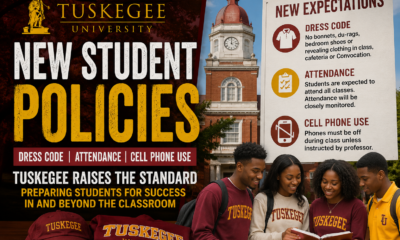
Tuskegee University Introduces New Student Policies Focused on Professionalism and Career Readiness

HBCU ORIGINAL

Published

on

TUSKEGEE, Ala. Tuskegee University is introducing new student policies focused on professionalism, academic success, and career readiness as the university prepares to welcome its largest incoming class in 32 years.

In a message to parents of incoming students, President Dr. Mark A. Brown announced updated expectations covering student attire, classroom attendance, and cellphone use.

Under the new dress code, students will not be permitted to wear bonnets, du rags, bedroom shoes, or revealing clothing in classrooms, the university cafeteria, or during official campus events, including Convocation. Students attending business meetings and other professional events will also be expected to wear business attire with appropriate footwear.

Brown said the goal is to help students prepare for life after graduation, not to limit their college experience.

“The goal here is not meant to restrict students from enjoying the Tuskegee Experience, but to prepare them with a solid foundation for the workforce they will enter once they leave Tuskegee.”

The university is also strengthening its classroom expectations. Cellphones must remain off during class unless an instructor allows their use, and attendance will be monitored more closely to encourage academic success.

As part of its expanded career readiness initiative, students will be expected to complete internships, identify professional certifications related to their career goals, and build a professional resume before graduation. Tuskegee currently offers more than 30 professional certification opportunities at no additional cost.

The new policies have already sparked conversations throughout the HBCU community. Some believe the changes continue the long standing tradition of preparing students for professional careers, while others question whether banning items such as bonnets and du rags reinforces outdated views of professionalism.

Founded in 1881, Tuskegee University has built a legacy of developing leaders in business, education, science, engineering, the military, and public service. University leaders say these updated expectations are intended to strengthen that tradition while helping students transition successfully into the workforce.

As students return to campus this fall, many will be watching to see how the new policies shape the student experience and whether they become a model for other HBCUs across the country.

Continue Reading

Alumni Impact

Miles College Electrifies the Field by Welcoming Recent Graduate Daja Gratton as Steaming Flags Instructor

HBCU ORIGINAL

Published

on

The rhythm is about to get even hotter at Miles College as the institution proudly announces Class of 2025 powerhouse Daja Gratton as the newest instructor for the legendary Steaming Flags!

From 2021 through 2025, Gratton brought unmatched fire and precision to the field as a standout performer with both the Purple Marching Machine and the Steaming Flags. Throughout her dynamic collegiate career, she mastered the complex art of color guard performance while representing Miles College with fierce pride and undeniable excellence. Her journey stands as a testament to elite discipline, synchronized teamwork, and the gold standard of the university band program.

During her time as a student performer, Gratton was the heartbeat of one of the most thrilling traditions at Miles College. Her work with the Steaming Flags injected high energy, stunning visual artistry, and pure school spirit into halftime shows and competitions that mesmerized crowds and uplifted the entire campus community.

Now, she steps into a leadership role ready to ignite the next generation of performers! Gratton brings a deep passion for mentorship and coaching, transforming her direct field experience into powerful instruction. She is dedicated to building confidence, elite sportsmanship, and sharp technical skills in aspiring auxiliaries, proving her impact extends far beyond the stadium lights.

Miles College celebrates Daja Gratton for her phenomenal accomplishments and welcomes her back to lead the Steaming Flags into an unforgettable new era of excellence!

About the Miles College Steaming Flags

The Steaming Flags serve as the official color guard and visual auxiliary unit for the famous Miles College Purple Marching Machine in Fairfield, Alabama. They are widely celebrated as one of the most dynamic and visually captivating performance groups in collegiate marching band culture.

  • Visual Heartbeat of the Band: The Steaming Flags transform the musical power of the Purple Marching Machine into synchronized physical art. They add vibrant color, motion, and theatrical flare to every halftime show, parade, and stadium performance.

  • Dynamic Performance Style: In the celebrated tradition of historically Black colleges and universities, the Steaming Flags go far beyond standard flag spinning. Their routines blend intricate flag manipulation, rapid tosses, sharp marching techniques, and expressive dance choreography that matches the driving tempo of the band.

  • Elite Training and Tradition: Performing with this unit requires intense stamina, rhythm, technical precision, and flawless coordination. Members undergo rigorous conditioning to execute complex visual routines while maintaining peak energy and showmanship from the first beat to the final whistle.

  • Leadership and Pride: As premier ambassadors for Miles College, the flag line embodies school spirit and cultural pride. The unit fosters lifelong sisterhood and leadership development, making experienced alumni instructors like Daja Gratton essential for preserving their rich standards of excellence.

Continue Reading

Trending Now