

Politics
Supreme Court Decision Reignites Debate Over Voting Rights and Fair Representation

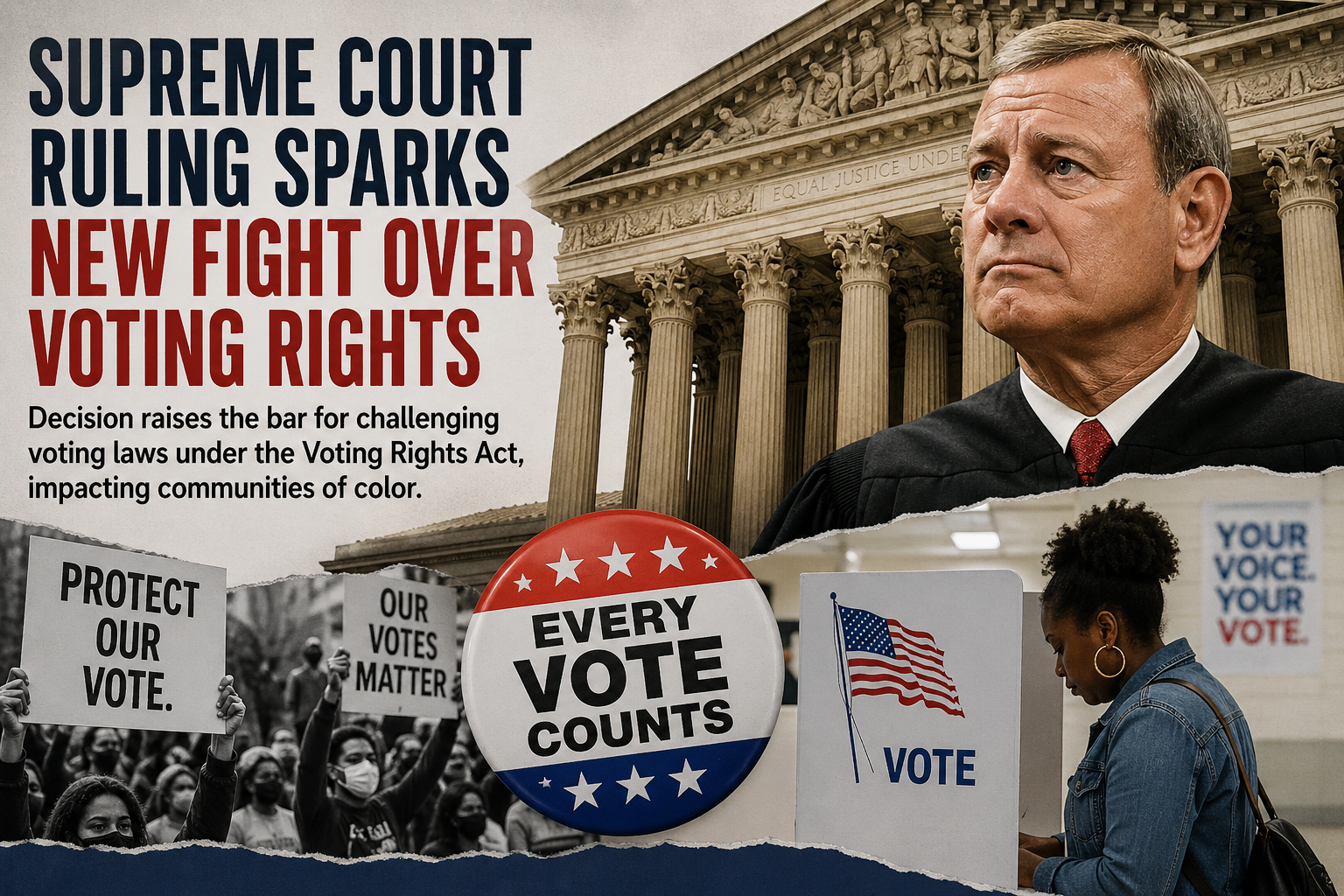
The U.S. Supreme Court, led by Chief Justice John Roberts, has issued a decision that is reshaping the national conversation around voting access and racial fairness in elections.
At the center of the case is the long-standing Voting Rights Act, a landmark law created during the Civil Rights era to prevent discriminatory voting practices and protect fair representation for all Americans. For decades, it has served as a legal tool to challenge election rules that disproportionately affect minority voters, including many Black communities.
What the Court decided
In its latest ruling, the Court narrowed how the Voting Rights Act can be used in legal challenges. Under the new interpretation, it is no longer enough to show that a voting rule results in unequal impact. Instead, challengers must now prove that discriminatory intent was deliberately involved.
Legal scholars and civil rights advocates say this raises the bar significantly for proving voting discrimination in court.
Why HBCU communities are paying attention
Historically Black Colleges and Universities (HBCUs) sit at the center of civic engagement, leadership development, and voter education. Many students, alumni, and surrounding communities have long relied on protections under the Voting Rights Act to ensure fair political representation.
For HBCU scholars and advocates, this decision is more than legal theory—it directly connects to:
- how districts are drawn in Black communities
- access to polling locations and voting resources
- long-term political representation for minority voters
Civil rights organizations argue that reducing protections could make it harder to challenge voting systems that unintentionally—but consistently—disadvantage Black voters.
Different perspectives
Supporters of the ruling argue that the change brings clarity to how discrimination must be proven in court and prevents what they see as overly broad legal interpretations.
Critics, however, say the decision weakens one of the most important civil rights protections in American democracy. They warn it could open the door for voting rules that disproportionately affect minority communities, even without explicit intent.
What happens next
The ruling is expected to influence future redistricting battles, state voting laws, and upcoming election challenges across the country. Legal experts anticipate a wave of new court cases testing the limits of the decision.
For HBCUs, the moment reinforces a familiar mission: educating, organizing, and preparing the next generation of leaders to engage in civic life with awareness and strategy.
As one civil rights scholar put it, the question now is not just about law—but about how democracy is experienced on the ground in Black communities across America.












In 2025, career readiness has evolved beyond resumes and degrees. HBCUs are leading the way with digital badges and micro-credentials, giving students a competitive edge in an increasingly skills-based job market.
What Are Digital Badges and Micro-Credentials?
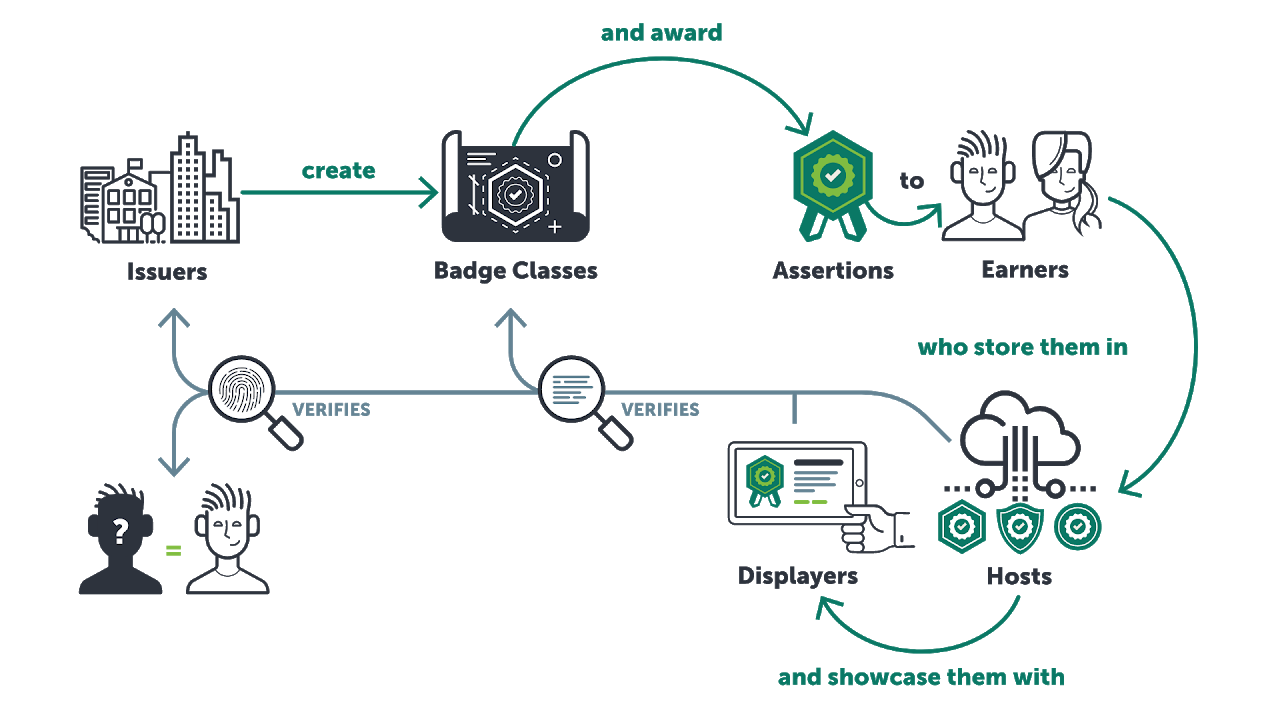
These are verifiable, stackable credentials that show specific skill mastery. Unlike traditional transcripts, badges are industry-recognized, sharable online, and often tied directly to project-based work.
Students can earn badges in:
-
Cybersecurity fundamentals
-
Data analytics and business intelligence
-
AI and generative tools
-
Project management
-
Digital marketing
-
Biotech and medical tech basics
This creates a portfolio of real-world skills for employers.
Why This Matters for HBCU Students
-
Students without extensive internship experience can prove practical skills.
-
First-generation college students gain industry exposure early.
-
HBCUs can adapt faster to job market needs without creating new majors.
AI + Badges = Career Acceleration
Some HBCUs now integrate AI to:
-
Recommend badges based on career goals
-
Build AI-powered resumes
-
Provide virtual interview practice
-
Track skills progression with blockchain-secured credentials
Graduates leave with a degree, verified badges, and portfolio projects—making them more competitive than ever.
How to Earn Badges / Training Resources
-
IBM SkillsBuild – https://skillsbuild.org
-
Google Career Certificates – https://grow.google/certificates/
-
Coursera & edX HBCU pathways – https://www.coursera.org/hbcus
-
AWS Skills and Cloud Certifications – https://aws.amazon.com/training/

Boston could soon see the establishment of its first historically Black college or university (HBCU) presence, as city leaders take steps to explore the creation of a satellite campus.
City Council Vice President Brian Worrell recently introduced a proposal calling for a hearing focused on bringing an HBCU satellite campus to Boston. The effort, he said, would not only expand educational opportunities but also serve as a beacon for young Black students in the city.
“An HBCU presence would provide role models for current Black students by showing them a tangible pathway to success,” Worrell said. “Boston led the way in educating Black students in the first half of the 19th century, with the opening of the Abiel Smith School, and we need to discover that trailblazing spirit once again.”
Despite being home to more than 25 colleges and universities, Boston currently lacks an HBCU. Worrell hopes to change that with support from initiatives like the Building Bridges HBCU program, which is actively working to attract a historically Black college to open a satellite campus in the city. An update on those efforts is expected later this year.
“There are more than 100 historically Black colleges and universities in the country, with the vast majority of them located in southern states as a response to Jim Crow laws,” Worrell noted in his council order. “The need for more culturally sensitive schools, such as HBCUs, has grown in the past decade based upon current rulings and the actions of the current federal administration.”
Worrell emphasized the vital role HBCUs play in Black advancement, stating that while HBCUs make up just 3% of colleges nationwide, they produce 40% of Black engineers, 50% of Black lawyers and doctors, 70% of Black dentists, and 40% of Black members of Congress.
Cory McCarthy, Chief of Student Support for Boston Public Schools, echoed the importance of this initiative.
“The appetite for a HBCU has grown immensely within the last five years,” McCarthy said. “An opportunity to bring a HBCU to Boston would further highlight the commitment and dedication of our city to create an educational ecosystem that values, elevates and develops opportunities for Black students to be successful.”
The City Council has referred the proposal to the Committee on Education, with a hearing expected to take place in the fall.
Story credit: Gayla Cawley, Boston Herald ©2025 MediaNews Group, Inc. Distributed by Tribune Content Agency, LLC. Visit bostonherald.com

By HBCU Original Staff
Published May 29, 2025
In 2025, Donald J. Trump has once again put his presidential pardon power on full display—this time in his second term, issuing a wave of clemency decisions that continue to spark debate across the nation.
Since his return to the White House, Trump has pardoned a broad list of individuals, many of whom have been at the center of political and legal controversies. The pardons have been hailed by supporters as efforts to correct what they see as unfair treatment by a “weaponized” justice system, while critics argue the moves reflect a pattern of shielding allies, amplifying a narrative of persecution, and undermining the legitimacy of law enforcement.
The Sweep: Pardoning January 6 Capitol Riot Defendants
Perhaps the most dramatic move came on Trump’s inauguration day, January 20, 2025. He granted full pardons to nearly 1,500 individuals charged in connection with the January 6, 2021 Capitol riot—ranging from nonviolent participants to those convicted of violent crimes against law enforcement officers.
Among the clemency recipients were prominent far-right figures like Enrique Tarrio, former Proud Boys leader, whose 22-year sentence for seditious conspiracy was commuted, and Stewart Rhodes, founder of the Oath Keepers, whose 18-year sentence was reduced to time served.
Trump described this mass pardon as an effort to “end a grave national injustice” and promote “national reconciliation,” but the move drew sharp criticism from many who viewed it as a dangerous dismissal of the violent assault on democracy.
High-Profile Pardons: From Dark Web to Political Figures
Among other notable pardons:
-
Ross Ulbricht, the founder of the infamous Silk Road dark web marketplace, was granted a full and unconditional pardon. Despite a life sentence for drug trafficking and money laundering, Ulbricht’s supporters in the libertarian and cryptocurrency communities hailed the pardon as a blow against government overreach.
-
Rod Blagojevich, former Illinois Governor known for attempting to sell Barack Obama’s vacant Senate seat, received a full pardon that cleared his criminal record after his sentence was commuted during Trump’s first term. Blagojevich has been vocal in his support for Trump, even calling himself a “Trump-ocrat.”
-
NBA YoungBoy (Kentrell DeSean Gaulden), the popular rapper serving a sentence on a federal gun charge, was pardoned in late May 2025. YoungBoy expressed gratitude for the pardon, calling it an opportunity to rebuild his life and career.

Controversies and Political Alliances
Many of Trump’s pardons have focused on individuals with political or financial ties:
-
Trevor Milton, founder of Nikola, convicted of fraud, was pardoned despite ongoing legal controversies. Milton and his wife have donated millions to Trump’s campaigns.
-
Several cryptocurrency executives, including the co-founders of BitMEX, were pardoned after pleading guilty to violations related to anti-money laundering laws.
-
Former Republican Tennessee Senator Brian Kelsey and former Virginia sheriff Scott Jenkins, both convicted of corruption-related charges, were also pardoned amid claims of political prosecution.
-
Anti-abortion activists convicted for clinic blockades, including Lauren Handy—a figure associated with a highly controversial case involving the discovery of fetal remains—were granted clemency.
The Critics Speak Out
Civil rights advocates and legal experts warn these pardons may deepen distrust in the justice system. Dr. Tamika Hall, a legal analyst, commented:
“This series of pardons isn’t just about correcting miscarriages of justice. It’s a political tool to reward loyalty and erase accountability.”
They argue that pardons extended to January 6 defendants and politically connected figures send a troubling message about equal justice under the law.
Supporters Defend the Pardons
Trump supporters and some political commentators praise the clemency as a way to fight what they describe as “political persecution” and “selective prosecution.” They see the pardons as restoring balance to a system they believe unfairly targets conservatives and Trump allies.
What This Means for America
As the 2024 election aftermath unfolds and Trump maintains a strong hold over a large voting base, the 2025 pardons are more than legal acts—they are political statements shaping the national conversation around justice, loyalty, and power.
Whether viewed as rightful acts of mercy or as controversial power plays, Trump’s pardons will continue to be a defining part of his legacy—and a story that keeps the nation talking.
Join the Conversation:
What are your thoughts on President Trump’s 2025 pardons? Do you see them as justice served or political favoritism? Connect with us on Twitter and Instagram @HBCUOriginal and share your voice.

North Carolina’s Historically Black Colleges and Universities (HBCUs) are at a crossroads, facing an uphill battle against political shifts, financial inequities, and leadership turnover. In just three years, seven out of ten HBCU leaders in the state have stepped down—an alarming trend fueled by partisanship, longstanding underfunding, and internal governance struggles.
The Political Storm: DEI Under Fire
Harold Martin Sr., Chancellor Emeritus of North Carolina Agricultural and Technical State University (N.C. A&T), highlights the shifting political landscape as a major hurdle. With efforts to ban Diversity, Equity, and Inclusion (DEI) initiatives gaining traction, HBCU administrators are finding it increasingly difficult to foster inclusive environments.
“The push to eradicate DEI has impacted higher education nationwide, but it’s particularly concerning for HBCUs,” Martin explains. “We are all trying to navigate how this affects our ability to recruit students and create a welcoming atmosphere on campus.”
Two anti-DEI bills introduced in the North Carolina General Assembly—Senate Bill 227 and House Bill 171—threaten to further marginalize these institutions. The former seeks to eliminate DEI in public education, while the latter extends these restrictions to state and local government agencies, even criminalizing the use of public funds for DEI efforts.
Jerry Wilson, Director of Policy and Advocacy at the Center for Racial Equity in Education (CREED), sees this political climate as a driving force behind leadership instability.
“It’s incredibly challenging to serve the students that HBCUs cater to when equity initiatives are under attack,” Wilson notes. “These institutions have long worked to level the playing field, but now even that mission is being scrutinized.”
Federal Threats: What’s at Stake for HBCU Funding?
Beyond state-level politics, HBCUs are also bracing for potential federal funding cuts. Martin warns that if the U.S. Department of Education is dismantled, as proposed by former President Donald Trump, Title III-B funding—critical for minority-serving institutions—could be in jeopardy. These funds support essential services like staffing, technology upgrades, and infrastructure maintenance.
“Losing these funds would be devastating,” Martin emphasizes. “HBCUs rely on them for financial stability, and their absence could put many institutions at serious risk.”
A History of Underfunding
HBCUs have faced chronic underfunding for decades. A 2023 federal analysis revealed that from 1987 to 2020, 16 of the nation’s 19 historically Black land-grant universities were underfunded by a staggering $13 billion. North Carolina alone has a funding gap exceeding $2 billion between its HBCU land-grant institutions and their predominantly white counterparts.
David Sheppard, Chief Business and Legal Officer for the Thurgood Marshall College Fund, underscores the impact of this disparity.
“State governments are simply not honoring their obligations to fund HBCUs equitably,” Sheppard states. “This puts these institutions at a severe disadvantage compared to predominantly white institutions that receive full state support.”
Financial Pressures and Enrollment Challenges
For private HBCUs, financial stability hinges on tuition revenue. Unlike public universities, they don’t receive state funding, forcing them to balance affordability with operational sustainability. Many students depend on federal aid and loans to afford tuition, making any disruptions to funding particularly damaging.
Public HBCUs face a different financial strain: tuition rates are controlled by the University of North Carolina (UNC) System Board of Governors. For nearly a decade, the board has restricted tuition hikes for in-state students, limiting revenue growth. Given that most HBCU students are in-state, this restriction has created financial hurdles.
“The competition for students is intense,” Martin explains. “With a relatively flat high school graduation rate in North Carolina, all universities—both public and private—are fighting for the same pool of students.”
Recognizing these challenges, Martin successfully petitioned to increase N.C. A&T’s out-of-state enrollment cap from 18% to 25% during his tenure. This strategy led to increased enrollment, improved retention, and stronger graduation outcomes. Today, several North Carolina HBCUs have expanded their out-of-state enrollment caps:
- N.C. A&T & North Carolina Central University: 35%
- Elizabeth City State University: 50%
- Winston-Salem State University & Fayetteville State University: 25%
Infrastructure and Technological Gaps
Underfunding extends beyond tuition—it affects campus infrastructure and technology. While predominantly white institutions boast cutting-edge facilities and seamless Wi-Fi access, many HBCUs struggle with outdated buildings and limited digital resources.
“Imagine a college campus where Wi-Fi isn’t a given,” says Harry Williams, President and CEO of the Thurgood Marshall College Fund. “It’s a basic necessity for modern education, yet some HBCUs lack reliable access, putting students at a disadvantage.”
Governance Conflicts and Leadership Exodus
A lesser-discussed issue plaguing HBCUs is governance conflict. Increasingly, university board positions are filled with political appointees who may lack higher education experience. According to Sheppard, these board members often overstep their roles, creating friction with university presidents and chancellors.
“Some appointees come in with their own agendas, rather than focusing on the institution’s best interests,” he explains. “This interference makes leadership positions untenable, leading to high turnover.”
The Future of North Carolina’s HBCUs
Despite these challenges, Wilson remains firm in his belief that HBCUs are more essential than ever.
“These institutions were founded out of necessity, and their role remains just as critical today,” Wilson says. “At a time when diversity and equity efforts face hostility, HBCUs continue to be the best option for Black students in North Carolina.”
As North Carolina’s HBCUs navigate these turbulent waters, their resilience and commitment to education remain unwavering. However, the path forward demands advocacy, equitable funding, and policies that prioritize their survival—not their suppression.

WASHINGTON – The U.S. Department of Agriculture (USDA) has suspended a scholarship program designed to support students from rural and underserved communities attending historically Black colleges and universities (HBCUs), according to the program’s official website.
The 1890 Scholars Program, which aims to increase enrollment in agriculture-related fields at the nation’s 19 historically Black land-grant universities, is now listed as “suspended pending further review” on its webpage.
The USDA has not provided an official response regarding the decision. The move follows broader federal rollbacks of diversity and inclusion initiatives under the administration of President Donald Trump.
The program offers full tuition, room, and board to recipients. In 2024, the USDA allocated $19.2 million in scholarships to 94 students, according to agency records.
Representative Alma Adams of North Carolina, a co-founder and co-chair of the Congressional HBCU Caucus, criticized the suspension, calling it “a clear attack on an invaluable program that ensures higher education remains accessible to all.” She added, “This scholarship corrects historic racial inequities in the land-grant system, not contributes to them.”
It remains unclear exactly when the program was halted. However, archived versions of the website reviewed by Reuters indicate the suspension notice has been in place since at least February 16.
-
 Campus2 months ago
Howard Alumnus Chequan Lewis Takes the Helm as CEO of Crunch Fitness
-
 Campus3 weeks ago
Why Major Artists Are Cancelling Concerts and Tours in 2026
-
 Campus1 month ago
SIAC Mourns the Loss of Benedict Director of Athletics, Hall of Famer Willie Washington
-
 Campus1 month ago
Albany State University Receives Tara VanDerveer Fund for the Advancement of Women in Coaching Grant
-
 Sports1 week ago
Jackson State Takes No. 1 as Morgan State Climbs in HBCU Football Poll
-

 Sports1 week ago
HBCU Original’s Cross Country Watch List: 25 Runners Making Their Mark This Fall
-
 Sports1 week ago
Howard Holds Off Delaware State for First Home Volleyball Win
-

 Sports1 week ago
HBCU Cross Country Championship Season Is Coming: Dates and Locations for Five Conferences