


Campus
From Slavery to Scholarship: The Role of Food in the Birth of HBCUs and Cultural Resilience
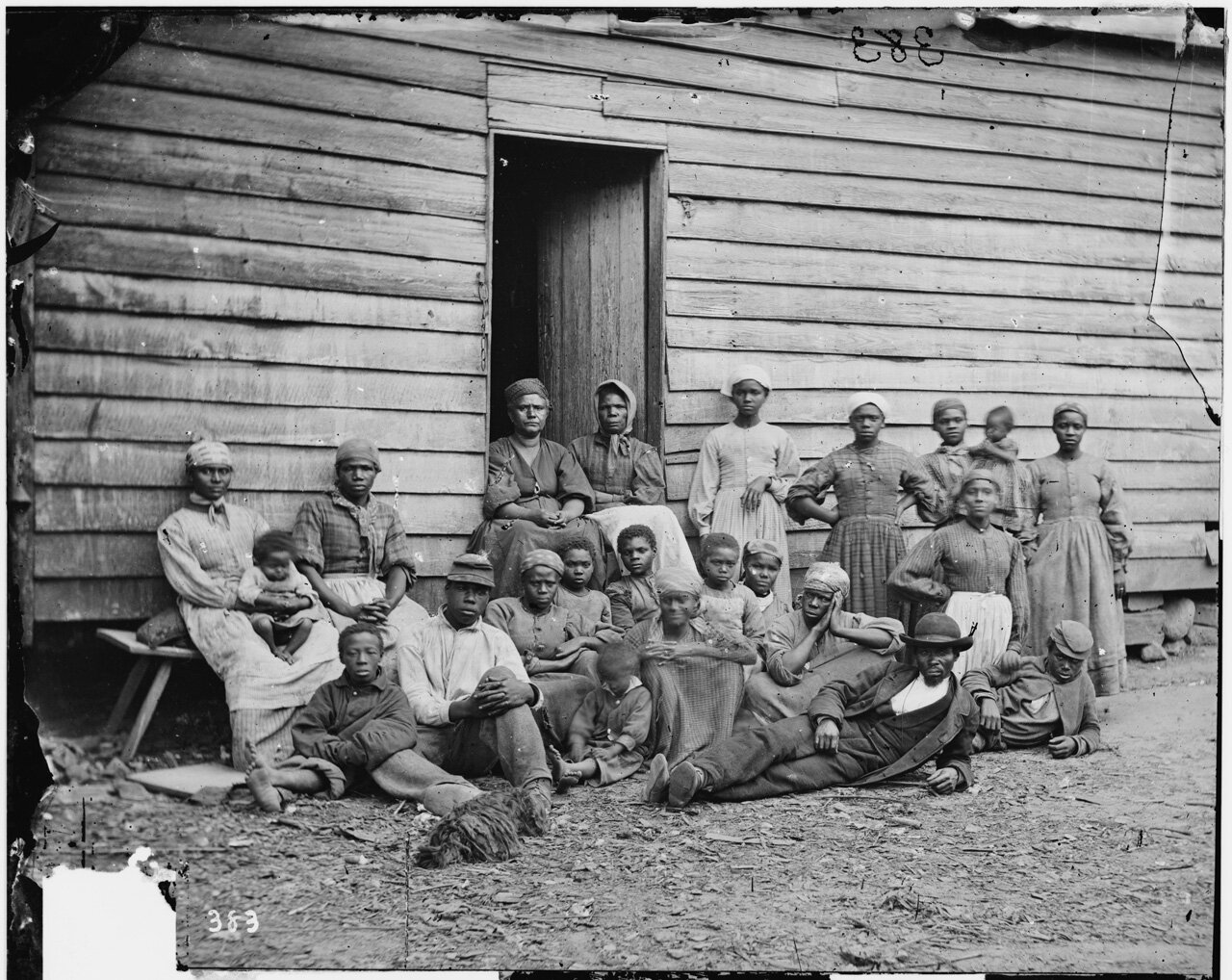
The story of Historically Black Colleges and Universities (HBCUs) is one of resilience, creativity, and empowerment. Long before the first HBCU campuses were built, enslaved African Americans created a culture rooted in survival, community, and hope—a culture often centered around food. From plantation kitchens to family recipes handed down through generations, food was much more than nourishment. It was a lifeline, a way to connect with African heritage, and ultimately, a bridge to a future of education and self-determination.
When slavery ended, the desire for education and a better life ignited the formation of HBCUs, places where Black people could learn freely, come together, and build their futures. And food, as it turns out, played a major role in making that dream a reality.
Food as Resistance and Connection
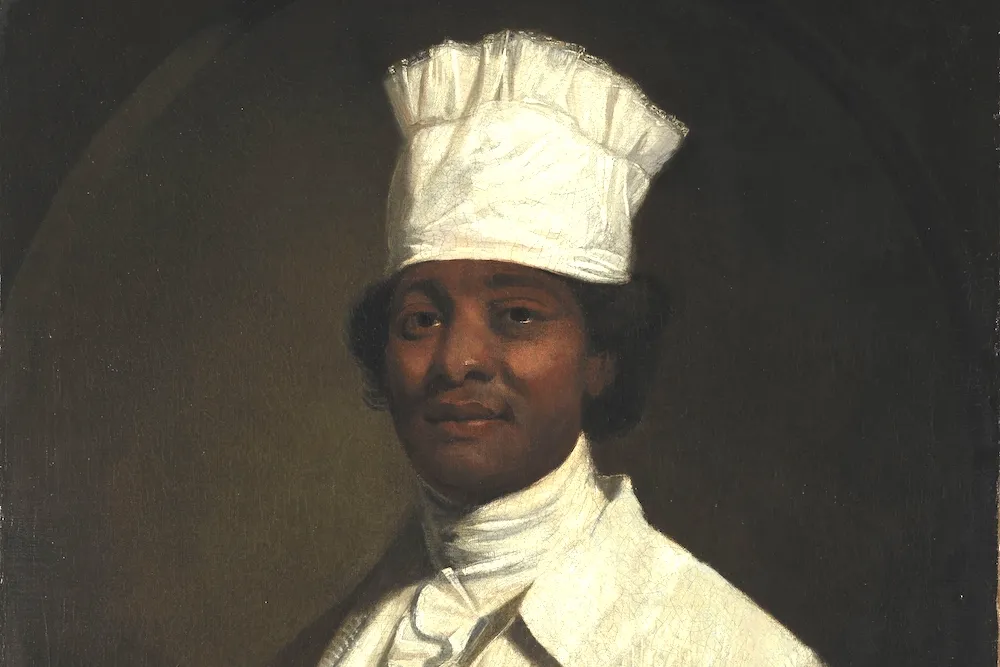
In the kitchens and fields of plantations, enslaved people transformed food into a powerful act of resistance. Despite harsh conditions, they held onto African traditions by growing, cooking, and even adapting native foods into something uniquely their own. Ingredients like okra, rice, black-eyed peas, and yams weren’t just foods—they were pieces of home, representing a heritage they fought to keep alive.
Through shared meals and passed-down recipes, enslaved families built a sense of community, a reminder that they could find strength in each other, even in the worst of times. The resilience they showed in creating meals from scraps is a legacy that remains in Black cuisine today, where dishes like gumbo, collard greens, and sweet potato pie tell stories of survival, culture, and unity.

The First HBCUs: Feeding the Mind and the Body
When freedom finally came, the African American community knew that education was the key to building a brighter future. HBCUs were founded as places of learning, empowerment, and safety, where the next generation could prepare for careers and leadership. Food continued to play a vital role, as early HBCUs emphasized practical skills, including farming and cooking, to help students achieve independence.
At schools like Tuskegee University, founded in 1881, students learned agriculture, culinary skills, and home economics, alongside academics. These programs weren’t just about feeding students; they were about building self-sufficiency and passing down skills that would help entire communities. Many students at HBCUs learned not only how to grow food but also how to cook it in ways that honored their heritage and strengthened their community.
From Cooking Classes to Culinary Justice
Today, food remains central to the mission of HBCUs. Students learn about food science, nutrition, and agriculture to address issues like food deserts, where it’s hard for communities to access fresh, affordable food. Many HBCUs are also involved in “culinary justice”—a movement that honors the contributions of Black farmers, cooks, and foodways, while working toward food security and health equity.
This idea of “culinary justice” means ensuring that Black communities not only celebrate their culinary heritage but also have the resources to thrive. Whether it’s through starting community gardens, running food programs, or promoting local agriculture, HBCU students are keeping the legacy of self-sufficiency alive and using food to address challenges like chronic health conditions and access to nutritious food.
Why Food Matters to HBCUs (and to Us All)
The food we eat today has traveled a long journey, much like the story of HBCUs themselves. Every recipe passed down, every family meal shared, and every vegetable grown reminds us of the journey from survival to scholarship. For students at HBCUs, food is a powerful connection to history—a way to remember the resilience of those who came before, while building a healthier future for themselves and their communities.
As we celebrate the history and future of HBCUs, let’s remember the role of food as both a symbol of survival and a tool for success. Food has always been more than just something on a plate—it’s a story, a tradition, and a path forward. And like the HBCUs that continue to inspire generations, food remains a powerful link between the past, present, and future, nourishing not just bodies, but minds, communities, and dreams.
Campus
N.C. A&T’s Fellowship Gospel Choir Earns Stellar Award Nomination
By Charity L. Cohen | June 18, 2026
EAST GREENSBORO, N.C. — The North Carolina Agricultural and Technical State University Fellowship Gospel Choir has long carried the “award-winning” tag, and now the group is in line to add to that reputation. The choir has been nominated for a Stellar Award in the newly created HBCU Choir of the Year category.

The choir joins four other finalists — Howard University, the Morgan State University Choir, the Southern University Gospel Choir and the Fort Valley State University Choir — in a category designed to honor outstanding gospel choirs from historically Black colleges and universities. Winners will be announced at the 41st Stellar Gospel Music Awards, which Grammy-winning gospel artist Kirk Franklin will host.
The nomination adds another chapter to a 57-year history for the Fellowship Gospel Choir, which has served as a spiritual anchor for the A&T community and a symbol of the university’s dedication to faith, fellowship and musical craftsmanship.
Across those decades, the choir has shared the stage with major names in gospel and beyond, including Fred Hammond, Jason Nelson, Big Sean and Elevation Rhythm — collaborations that have helped cement its identity as a group willing to express its faith boldly through music.
“This nomination shows that our work isn’t in vain and that we are accomplishing our goal of encouraging people and bringing them closer to Christ,” said choir president Antonio Mattox Jr., a rising senior. “This recognition has given us a platform to do just that because that’s the entire purpose of our organization.”
Mattox, a choir member since his first year at A&T, narrated the group’s cover of Donald Lawrence’s “Matthew 28” — the very performance submitted to Stellar Award judges that ultimately clinched the nomination.
Choir director Marcus Williams, a 2017 A&T graduate who got his start with the group as a student drummer, said the “Matthew 28” performance captured both the choir’s talent and its history.
“It was a song that showcased their vocals. It had some dope moves that the kids created with it, which speaks to our legacy at A&T, and then it also had the choir robes, which just felt nostalgic,” Williams said.
For Williams, the nomination carries weight well beyond the choir itself, extending to the broader HBCU community and to Greensboro as a whole.
“I really can’t express how big it is, especially for Greensboro, but they’re celebrating and recognizing HBCUs as a whole,” Williams said. “It’s huge, and for the legacy of the choir being recognized, it just speaks of the hard work and innovation that was done over the years.”
The 41st Stellar Gospel Music Awards will take place Aug. 15 in Charlotte, where organizers will crown the first-ever winner of the HBCU Choir of the Year award.
Alumni Impact
Alabama State University and Morris Brown College Forge New Graduate Education Pathway
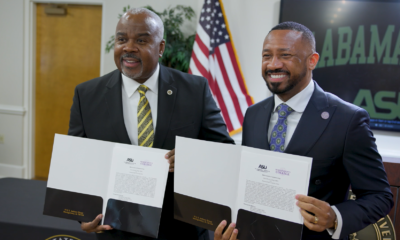
MONTGOMERY, Ala. — In a move that highlights the continued spirit of collaboration among Historically Black Colleges and Universities, Alabama State University (ASU) and Morris Brown College have officially entered into a new partnership designed to expand educational opportunities for students seeking advanced degrees.
The two institutions signed a Memorandum of Understanding (MOU) on June 16, 2026, at Alabama State University’s historic campus in Montgomery, Alabama. The agreement creates a direct pathway for Morris Brown College graduates to apply for admission into Alabama State University’s graduate degree programs, including several online offerings.
University leaders say the partnership reflects a shared commitment to increasing access to higher education while preparing the next generation of professionals, educators, and community leaders.
“Historically Black colleges and universities have long worked together to create opportunities that transform lives and strengthen communities,” said Alabama State University President Dr. Quinton T. Ross Jr. “As an institution founded to educate and prepare teachers, this partnership brings us full circle. Joining with Morris Brown College to continue that legacy makes this collaboration especially meaningful.”
The agreement is expected to create new opportunities for Morris Brown graduates seeking advanced degrees, particularly in the field of education. Alabama State University’s College of Education will play a key role in supporting students as they continue their academic journeys.
Dean Anthony Broughton emphasized the importance of the collaboration in addressing future workforce needs.
“This partnership with Morris Brown College represents our shared commitment to student achievement and to creating pathways that support educational and professional advancement,” Broughton said. “We are excited to welcome and support Morris Brown students as they pursue careers in education and help strengthen the teaching workforce for generations to come.”
The signing ceremony brought together ASU President Dr. Quinton T. Ross Jr. and Morris Brown College President Dr. Kevin E. James, symbolizing the growing cooperation among HBCUs dedicated to student success and institutional advancement.
As HBCUs continue to innovate and build strategic partnerships, this agreement serves as another example of how Black colleges are working together to create opportunities that extend beyond graduation. The collaboration not only strengthens academic pathways but also reinforces the historic mission of HBCUs to uplift communities through education, leadership, and service.
HBCU Original Magazine will continue to follow this partnership and its impact on students across both institutions.
Campus
Twin Sisters Make History as Valedictorian and Salutatorian at Cheyney University
Tia and Jasmin Criss, twin sisters from Philadelphia, have made history at Cheyney University, graduating as valedictorian and salutatorian at the nation’s oldest HBCU.
The sisters reached the top two academic honors together, marking a rare and inspiring achievement for both their family and the university community. Their accomplishment highlights years of academic discipline, leadership, and consistency throughout their college journey.
Cheyney University, founded in 1837, holds the distinction of being the oldest HBCU in the United States, making the Criss sisters’ achievement even more meaningful within a historic academic setting.
Their story has drawn attention for not only their academic excellence, but also the unique moment of twin siblings simultaneously earning the top two graduating honors at a single institution.
Campus
The Sound of the Yard: The Legacy of HBCU Marching Bands
When the drums start rolling and the brass section blasts the first note, something magical happens — the crowd rises, feet start stomping, and the stadium becomes a stage. That’s the power of HBCU marching bands — the lifeblood of the yard and the heartbeat of Black college pride.
Across the country, these bands have redefined what it means to perform. It’s not just about music — it’s about precision, power, and pride. Each halftime show tells a story of community, culture, and creative excellence that stretches from the campus yard to the world stage.
Legendary programs like The Human Jukebox of Southern University and The Sonic Boom of the South from Jackson State University have set the tone for decades, known for their dynamic choreography and iconic sound. The Marching 100 of Florida A&M University revolutionized marching band performance with intricate formations and high-energy brass arrangements, influencing college and high school bands globally.
But they’re not alone in this legacy.
-
The Ocean of Soul (Texas Southern University) brings unmatched groove and funk to every performance.
-
The Aristocrat of Bands (Tennessee State University) made history as the first HBCU band to win a GRAMMY Award in 2023 for “The Urban Hymnal.”
-
The Blue and Gold Marching Machine (North Carolina A&T State University) blends traditional sound with modern flair, leading parades like the Macy’s Thanksgiving Day Parade.
-
The Marching Storm (Prairie View A&M University) commands attention with style and showmanship, competing toe-to-toe with any major college program.
-
The Spartan Legion (Norfolk State University) continues to uphold the proud musical traditions of the MEAC and SWAC.
-
The Marching Maroon & White (Alabama A&M University) exemplifies disciplined performance and HBCU pride.
Additional extraordinary programs include:
-
The Trojan Explosion (Virginia State University) — high-energy performances with innovative formations.
-
The Red Sea of Sound (Winston-Salem State University) — signature style and powerful brass arrangements.
-
The Symphony of Soul (Bowie State University) — blending soulful melodies with marching precision.
-
The Marching Force (Hampton University) — a legacy of excellence on every field.
-
Showtime Band (Howard University) — dynamic, creative, and nationally recognized performances.
-
Sound Machine (North Carolina Central University) — a staple of modern HBCU band excellence.
From local parades to the Honda Battle of the Bands, HBCU bands bring an experience that transcends entertainment — it’s cultural storytelling through sound.
Their influence has reached far beyond the yard — from collaborations with Beyoncé’s Homecoming to halftime shows at the Super Bowl. These bands symbolize the discipline, excellence, and creativity that define HBCU culture.
For the students who march, every note is a tribute — to their ancestors, their schools, and the legacy they represent. The sound of the yard will always be more than music — it’s the soul of the HBCU experience.
#HBCUOriginal | #TheSoundOfTheYard | #BlackCollegeCulture | #HBCUBands
📺 Visit HBCUOriginal.com | 🎥 Watch more at YouTube.com/@THEHBCUORIGINAL
Campus
The Capitol Battle of the Bands 2025
Hosted by High Stepping Nationals | SECU Stadium – College Park, Maryland
The air in College Park was thick with rhythm, pride, and school spirit as the Capitol Battle of the Bands took over SECU Stadium. Hosted by High Stepping Nationals, this electrifying event brought together some of the most dynamic marching bands, drumlines, and spirit teams in the country — all under one roof, all for one culture.
From the first booming drumbeat to the final blast of brass, the stands shook with energy as crowds from across the East Coast gathered to witness HBCU greatness and local high school talent take center stage.
🎶 The Lineup
The field was blessed by the presence of elite bands including:
-
Norfolk State University Spartan Legion
-
North Carolina A&T Blue & Gold Marching Machine
-
Virginia State University Trojan Explosion
-
Winston-Salem State University Red Sea of Sound
-
Bowie State University Symphony of Soul
-
Hampton University Marching Force
-
Howard University Showtime Band
-
North Carolina Central University Sound Machine
-
PGCPS High School Pride, representing the best young talent across Prince George’s County
Each band brought their own flavor — from show-stopping arrangements and precision drills to heart-thumping drumline battles that left the crowd roaring.
💃🏽 The Spirit of the South
The cheerleaders, flag teams, and dance squads elevated the night with unmatched grace and attitude. From the Hampton Force dancers to the WSSU cheerleaders strutting into the stadium, every move reminded the audience that style, pride, and culture are at the heart of every performance.
🥁 The Drumline Faceoff
When Virginia State’s Trojan Explosion Drumline met Norfolk State’s Spartan Legion Drumline on the field, the night hit another level. Beats collided, sticks flew, and the energy was pure adrenaline. This was not just a battle — it was a statement.
🌟 PGCPS Pride
Representing Maryland’s future stars, the PGCPS High School Pride Ensemble showcased young musicians who are already marching toward excellence. Their performance was a reminder that the HBCU legacy is alive and growing strong in local schools.
🎥 Watch the Full Experience
Missed the live show? Don’t worry — you can relive every moment, every note, every move.
📺 Full Highlights: Watch now on YouTube – HBCU Original
🎬 YouTube Channel: @THEHBCUORIGINAL
-
Alumni Impact2 months agoMagic Johnson Highlights Rare HBCU Commencement Honor After Speaking at Two Alabama Schools
-
Campus2 months agoTwin Sisters Make History as Valedictorian and Salutatorian at Cheyney University
-
HBCU ORIGINAL2 months agoEdward Waters Wins 2026 SIAC Championship in 6–4 Battle Over Spring Hill
-
HBCU ORIGINAL1 month agoXavier Mills Continues Hollywood Rise With New Role in Is God Is
-
Alumni Impact2 months agoHBCU Broadcasting Icon Charlie Neal Has Died
-
HBCU ORIGINAL4 weeks agoHBCU Legacy Bowl Relocates to Atlanta for 2027, Expanding National Impact
-
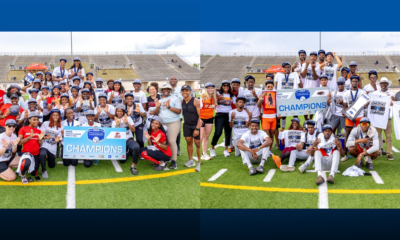
HBCU ORIGINAL2 months agoSIAC Outdoor Track & Field — Morehouse and Tuskegee Capture 2026 Championships
-
Alumni Impact1 month agoArthur M. Blank Family Foundation’s HBCU Scholarship Initiative Tops $4.2 Million in Student Support