
Events
💰 Dorm Room Deep Dive: The True Cost of the HBCU Experience


The choice to attend a Historically Black College and University is an investment in legacy, culture, and career trajectory. But for thousands of students and their families, the cost of that legacy comes with a profound financial strain, translating into high debt and a constant hustle.
This is a look beyond the sticker price, examining the Dorm Room Deep Dive into the economics of student life and the rising cost of the most essential American investment.
The Net Price Gap: Where the Financial Aid Stops
The most critical figure in an HBCU student’s financial life is not the tuition—it’s the net price, the amount remaining after all grants and scholarships are applied. For students at Historically Black Colleges and Universities, that gap is larger and more persistent than almost anywhere else.
Key Facts: The Affordability Challenge
| Financial Metric | HBCU Student Reality | Context & Impact |
| Unmet Need | Black students face the highest average unmet financial need, often exceeding $9,000 annually. | This is the gap students must close with loans, family contributions, or income. |
| Debt Burden | 86% of HBCU graduates leave with student loan debt. | The median debt at graduation is over $34,000. |
| The Wealth Gap | Four years after graduation, Black borrowers owe, on average, $25,000 more than their White peers. | This disparity is due to lower family wealth, slower repayment, and often greater borrowing for graduate school. |
While institutional and federal grant aid is robust—with over 85% of HBCU undergraduates receiving some form of grant assistance—the aid simply hasn’t kept pace with the comprehensive cost of attendance.
📈 2025-2026: Cost Projections and the Rising Tide
For the 2025-2026 academic year, the average total Cost of Attendance (COA) for an HBCU student living on campus is projected to fall in the range of $32,000 to $35,000, with many private institutions exceeding $55,000.
This rise is driven not just by tuition, but by escalating prices across the board.
The “Hidden Inflation” of College Life
The yearly tuition hike, often projected around 3.5% to 4.0% for the upcoming year, is only part of the equation. Students are getting hit hardest by non-tuition costs:
-
Mandatory Fees: Fees for technology, health services, and campus facility debt are rising faster than tuition. A student might see a flat tuition rate but a 10% jump in their “Student Services Fee” that is non-negotiable.
-
Room and Board: Housing costs are increasing due to construction, maintenance, and utility expenses. This often includes mandatory meal plans—a fixed cost that may not fully align with the student’s actual weekly grocery or dining budget.
-
Textbooks and Course Materials: Despite the shift to digital, the cost for access codes and specialized online materials can easily top $1,500 annually, draining financial aid refunds long before the semester ends.
-
Transportation and Loan Fees: An often-overlooked cost is the expense of traveling to and from campus. Furthermore, the small but mandatory loan origination fees on federal loans mean students often receive less than the amount they actually borrowed.
The Future Price Tag
If costs continue to rise at an average annual rate of 3.25%, a student entering an HBCU in 2025 with a $35,000 COA would face a cumulative four-year sticker price of over $147,000 by graduation in 2029. This is the staggering financial trajectory that underpins every student’s academic planning.
🤝 The Lifelines: Funding Your Future & Lessening the Blow
While the costs are daunting, there are powerful financial lifelines available to HBCU students that can significantly reduce the need for high-interest private loans. Success requires proactive planning and a deep dive into targeted resources.
Targeted Resources for HBCU Students
| Resource Type | Key Programs & Organizations | How They Help |
| Federal Government | FAFSA (Free Application for Federal Student Aid), Pell Grant (up to $\sim$7,395 for 2025-26), Federal Work-Study | Provides the foundational need-based aid. Pell Grants are crucial “free money” that does not have to be repaid. |
| HBCU Affiliates | UNCF (United Negro College Fund), TMCF (Thurgood Marshall College Fund) | These organizations offer hundreds of scholarships specifically for students attending their member institutions, often sponsored by major corporations (e.g., Apple, Google, Lowe’s). |
| State Grants | State-Specific Aid (e.g., Georgia’s HOPE, Ohio College Opportunity Grant) | Many states offer grants that are often tied to in-state enrollment and financial need. Check your state’s Department of Higher Education website. |
| Innovative Aid | Student Freedom Initiative | A non-profit offering an income-contingent funding alternative, particularly for STEM majors at Minority Serving Institutions, reducing reliance on traditional loans. |
| Private/Need-Based | Ron Brown Scholarship, ABOUT LOVE Scholarship, NAACP Scholarships | Large, competitive scholarships that target high-achieving, community-focused, and financially disadvantaged students. |
Practical Strategies to Reduce the Blow
-
Maximize “Free” Money: Apply for every external scholarship possible, focusing on awards specific to your major, state, or community involvement. Do not rely solely on your institution’s aid package.
-
Cut Textbook Costs with OER: Before buying new textbooks, check if your campus or department participates in Open Educational Resources (OER) initiatives, which provide free, openly licensed digital course materials. This can save hundreds per semester.
-
Leverage Institutional Discounts: Research which HBCUs offer universal in-state tuition rates or tuition waivers for specific student demographics (e.g., in-state students, high-achieving transfer students).
-
Work-Study First: If you must work, prioritize Federal Work-Study positions. These are subsidized by the government, meaning the university’s budget is less strained, and the earnings don’t count against your FAFSA eligibility for the following year.
-
Audit Your Fees: When reviewing your bill, question any non-essential fees (e.g., expensive parking passes, optional insurance). Every dollar saved against the non-tuition cost is a dollar that doesn’t become future debt.
✊ The Campus Side Hustle: Economy of Resilience
With a $9,000 average unmet need hovering over their heads, HBCU students have become masters of the “side hustle” economy, leveraging the unique cultural environment of the campus to generate income.
This is a necessary culture of entrepreneurial resilience, where skills are currency:
-
The Beauty & Styling Network: A student with braiding or barbering skills can generate hundreds of dollars per week, with prices spiking during major events like Homecoming. This is income used directly for rent, car notes, or to pay down a tuition balance.
-
The Food & Delivery Gap: Beyond national delivery apps, students often run micro-businesses selling homemade food (plates, snacks, or Sunday dinners) out of their apartments or dorms, using the dense campus environment as a ready market.
-
Academic Services: Students with a high GPA can earn money as tutors or by preparing intensive study guides for challenging courses.
This constant push to earn ensures cultural participation and personal solvency, but it comes at a cost: time. Every hour spent hustling is an hour taken away from studying, networking, or sleep, creating a heavy burden of academic and financial stress that is part of the modern HBCU reality.
The value of the HBCU experience—the incomparable network, the sense of community, and the unparalleled professional launchpad—is undeniable. But to access that value, the average student must first conquer a formidable financial mountain. The Dorm Room Deep Dive confirms that the Black college experience is not just an academic journey; it is a profound lesson in economic resilience.
🔗 The Lifelines: Essential Financial Aid Resources
For students and families navigating the financial challenges of the HBCU experience, these organizations offer critical financial aid, scholarships, and innovative funding solutions.
| Resource | Organization | Direct Link |
| Federal Aid | Free Application for Federal Student Aid (FAFSA) | https://studentaid.gov/h/apply-for-aid/fafsa |
| HBCU Affiliate | United Negro College Fund (UNCF) Scholarships | https://uncf.org/scholarships |
| HBCU Affiliate | Thurgood Marshall College Fund (TMCF) Scholarships | https://tmcf.org/students/explore-scholarships-programs/ |
| Innovative Funding | Student Freedom Initiative (SFI) | https://studentfreedominitiative.org/sfi-program/ |
| Private Scholarship | Ron Brown Scholar Program | https://ronbrown.org/rbs-login/ |
| Private Scholarship | Shawn Carter Foundation (formerly ABOUT LOVE) | https://shawncartersf.com/scholarship/ |
| Non-Profit Aid | NAACP Scholarships | https://naacp.org/find-resources/scholarships-awards-internships/scholarships |
| Cost Strategy | U.S. Department of Education: OER Resources | (Link to general Open Educational Resources search can be added here if desired) |



Alumni Spotlight
Essence Fest 2026 puts Grambling State’s marching band and HBCU culture on a national stage

Coca-Cola is once again using the ESSENCE Festival of Culture to put a spotlight on HBCU pride, and this year Grambling State University is at the center of it.
The 2026 festival runs July 3-5 in New Orleans, and Coca-Cola has released its entertainment and cultural programming for the weekend. On the Coca-Cola Stage, the lineup includes performances from Destin Conrad, Coi Leray and Mario. But the bigger story for the HBCU community is a separate activation built around Coca-Cola’s “The World Is My Yard” platform, which brings actress Eva Marcille together with a performance from Grambling State’s World Famed Tiger Marching Band — one of the most recognized names in HBCU band culture.
The activation goes beyond a performance slot. Representatives from 15 HBCUs will be on-site holding office hours for prospective students and their families, covering admissions, academic programs, campus life and other pathways into HBCU education. That turns the festival into a recruiting and visibility opportunity as much as a cultural showcase — a chance for schools like Grambling State to reach families who may never set foot on a Southern HBCU campus otherwise.
This marks Coca-Cola’s 31st consecutive year as an Essence Fest partner. The company’s 2026 platform theme, “Every Side Shines,” is centered on music, wellness, culture and connection. Stephanie Eaddy, Coca-Cola’s senior director of cultural marketing, framed the festival as something bigger than a single weekend, calling it “a powerful platform for connection, community and impact.”
The festival’s footprint extends well past culture and music. Coca-Cola noted that the 2025 event generated more than $321 million in economic impact for New Orleans, supported upwards of 2,400 jobs, and produced over $103 million in income for local workers and businesses — numbers that underscore just how much weight Essence Fest carries for the city each summer.
For Grambling State, the appearance is another example of HBCU culture reaching a national audience through a mainstream platform — band culture, brand partnership, and student recruitment all overlapping in one weekend in New Orleans.

The Penn Relays once again turned Franklin Field into a proving ground, where technique, endurance, and toughness were on full display. With a full slate of 400m hurdles and the men’s 3000m steeplechase championship, the day delivered both elite performances and unforgettable moments.
🏃🏾♀️ 400m Hurdlers Battle Through Grueling Heats
The 400m hurdles demanded precision and endurance, and across multiple heats, athletes pushed through fatigue, barriers, and tight competition.
🔥 Top Performances Across Heats
- Sanaa Hebron (Miami) – 55.30
- Gloria Guerrier (Yale) – 59.02
- Avery Clark (Ohio State) – 57.71
These performances set the tone, with athletes maintaining rhythm and speed through all ten hurdles.
🦬 HBCU Hurdlers Show Grit and Determination
HBCU athletes stepped into competitive fields and made their presence felt.
Howard University
- Cenaiya Billups – 56.87
- Aniya Woodruff – 58.14
- Lindsay Johnson – 58.87
- Carrie Vannoy – 1:00.65
Howard’s group showed depth and consistency, competing strong across multiple heats against top-tier programs.


Delaware State
- Chidubem (Miriam) Okwudibonye – 1:01.54
Her race became one of the defining moments of the day:
After clipping the final hurdle, she went down—but got back up and finished, showing resilience that went beyond the clock.

Johnson C. Smith
- Janya Barnes – 1:03.53
Barnes battled through a competitive heat, continuing to build momentum for the Golden Bulls program.

🏃🏾♂️ Delaware State’s Marian Drazan Charges to Steeplechase Podium
While the hurdles tested rhythm, the 3000m steeplechase tested everything else.
Delaware State’s Marian Drazan delivered one of the most impressive races of the meet, finishing 3rd in 8:43.97.
📊 Race Breakdown
- Early race: Positioned near the back (as low as 18th)
- Mid-race: Gradually gained ground
- Final laps: Surged into podium position
- Final lap: 1:04.09
🏆 Top Finishers
- Brian Boler (Princeton) – 8:40.29
- Billy Carlton (Georgia Tech) – 8:43.32
- Marian Drazan (Delaware State) – 8:43.97
His performance highlighted strategy, patience, and a powerful closing kick under pressure.
🎤 What Defined the Day
The Penn Relays isn’t just about fast times—it’s about execution under pressure.
And on this day, two themes stood out:
- Technical excellence in the 400m hurdles
- Endurance and strategy in the steeplechase
But above all, it was about resilience:
- A hurdler getting back up
- A distance runner climbing from the back to the podium
- HBCU programs competing with confidence
🔥 Final Take
At Franklin Field, the results tell part of the story.
The rest comes from moments:
- Every cleared hurdle
- Every water jump
- Every athlete refusing to quit
And for HBCU programs—especially Delaware State—it was a day of impact, pride, and progress.

In a dramatic shift from the brink of catastrophic escalation, President Trump announced a two-week ceasefire with Iran on Tuesday, hours before a midnight deadline that threatened the total destruction of Iranian national infrastructure. The pause in hostilities follows an intense period of military strikes and an international outcry over the President’s rhetoric.
From Ultimatum to Ceasefire
Earlier on Tuesday, the situation reached a fever pitch when President Trump warned that “a whole civilization will die tonight” if Iran did not meet his demands to reopen the Strait of Hormuz—a vital global energy artery. The President had explicitly threatened to target civilian infrastructure, including every bridge, power plant, and water treatment facility in the country, a move legal experts warned would constitute a war crime.However, by late afternoon, a stark reversal was announced. The two-week ceasefire, brokered in part through diplomatic efforts in Pakistan, is contingent on Iran opening the Strait and adhering to specific terms to de-escalate the U.S.-Israeli bombing campaign.
Domestic and International Reactions
The President’s threats sparked a firestorm of condemnation in Washington. House Minority Leader Hakeem Jeffries (D-N.Y.) called the rhetoric “unhinged,” while other Democratic lawmakers, including Rep. Ayanna Pressley (D-Mass.) and Rep. Pramila Jayapal (D-Wash.), characterized the proposal as “genocide” and called for the President’s removal from office.While most Republicans remained supportive of a “strong” approach, some, like Rep. Nathaniel Moran (R-Texas), broke ranks to condemn the threat against an entire civilization. International leaders and human rights organizations also voiced grave concerns over the potential for massive civilian casualties.
Developments on the Ground
Despite the ceasefire announcement, Tuesday began with significant military activity:
-
Kharg Island: U.S. forces conducted “restrikes” on military targets at Iran’s primary oil export hub.
-
Civilian Defiance: In Tehran, Iranian officials and citizens staged demonstrations near power plants, vowing to act as human shields to protect public infrastructure.
-
Casualties and Displacement: The conflict has already taken a heavy toll, with over 1,900 people reported killed in Iran and more than 1,400 in Lebanon.
The Path Forward
The two-week window provides a narrow opportunity for diplomacy. Iran’s 10-point proposal for a permanent peace includes guarantees against future aggression and an end to Israeli strikes in Lebanon. While the ceasefire brings a temporary reprieve to the region, the situation remains “critical and sensitive” as both sides weigh their next moves in what has become the most significant military conflict of the Trump administration’s current term.
Events
Southern Royalty Meets Hip-Hop Heritage: T.I. Enlists Tuskegee’s Marching Crimson Pipers for ‘Trauma Bond’ Visuals
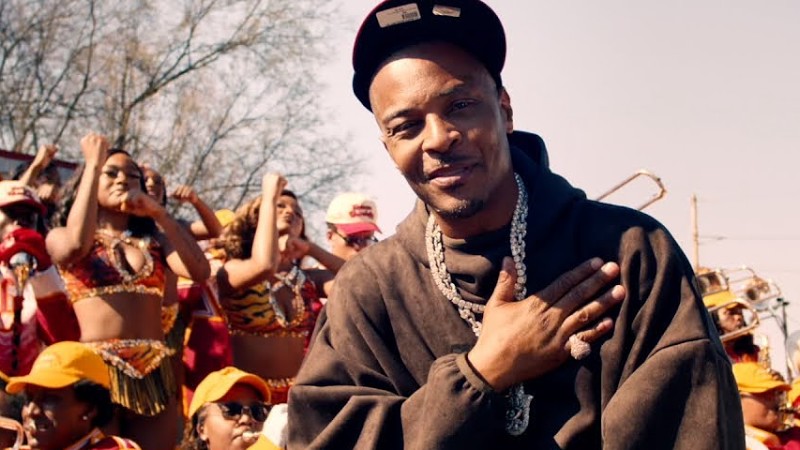
In a powerful collision of Southern hip-hop and HBCU excellence, Atlanta icon T.I. has released the official music video for “Trauma Bond,” featuring the legendary Tuskegee University Marching Crimson Pipers.
The collaboration serves as a centerpiece for the rollout of T.I.’s twelfth and final studio album, Kill The King. Rather than opting for traditional music video tropes, the “King of the South” chose to highlight the discipline, pageantry, and cultural weight of one of the nation’s most storied HBCU band programs.
A Cinematic Tribute to HBCU Culture
Directed by visionary filmmaker Chris Robinson—marking a high-profile reunion with T.I. exactly 20 years after their cult-classic film ATL—the video was shot in the historic “Bluff” neighborhood of Atlanta. The visuals capture a striking contrast: the raw, introspective energy of T.I.’s lyrics set against the sharp, synchronized precision of the Crimson Pipers.
The choice of Tuskegee is far from coincidental. The track, produced by Mr. Hanky, is built on a triumphant, cinematic foundation that mirrors the “showtime” energy of an HBCU halftime performance. For Tuskegee alumni and fans, the sound is instantly recognizable, as the production samples the spirit of the band’s iconic anthem, “Ball N’ Parlay.”
The ‘Ball N’ Parlay’ Connection
By integrating the Marching Crimson Pipers, T.I. taps into a deep-rooted Southern tradition. “Ball N’ Parlay,” originally a 1999 track by the late Houston rapper Big Pokey, has become the unofficial heartbeat of Tuskegee’s campus life. Seeing the band bring that same energy to a mainstream global platform reinforces the immense influence HBCU bands have on modern music production and aesthetic.
The Final Chapter: Kill The King
“Trauma Bond” represents a significant shift from T.I.’s previous high-energy single, the Pharrell-produced “Let ’Em Know.” This latest release offers a more vulnerable look at loyalty, street ethics, and the psychological “bonds” formed through shared struggle.
As T.I. prepares to retire his musical persona to focus on his expanding business empire, the inclusion of an HBCU institution like Tuskegee feels like a deliberate move to cement his legacy within the community. It isn’t just a music video; it’s a full-circle moment for Southern culture—honoring the institutions that have provided the soundtrack to the South for generations.
Original reporting based on coverage by Anaya McDonald for Black Enterprise and DJ Pup Dawg for iHeartRadio.
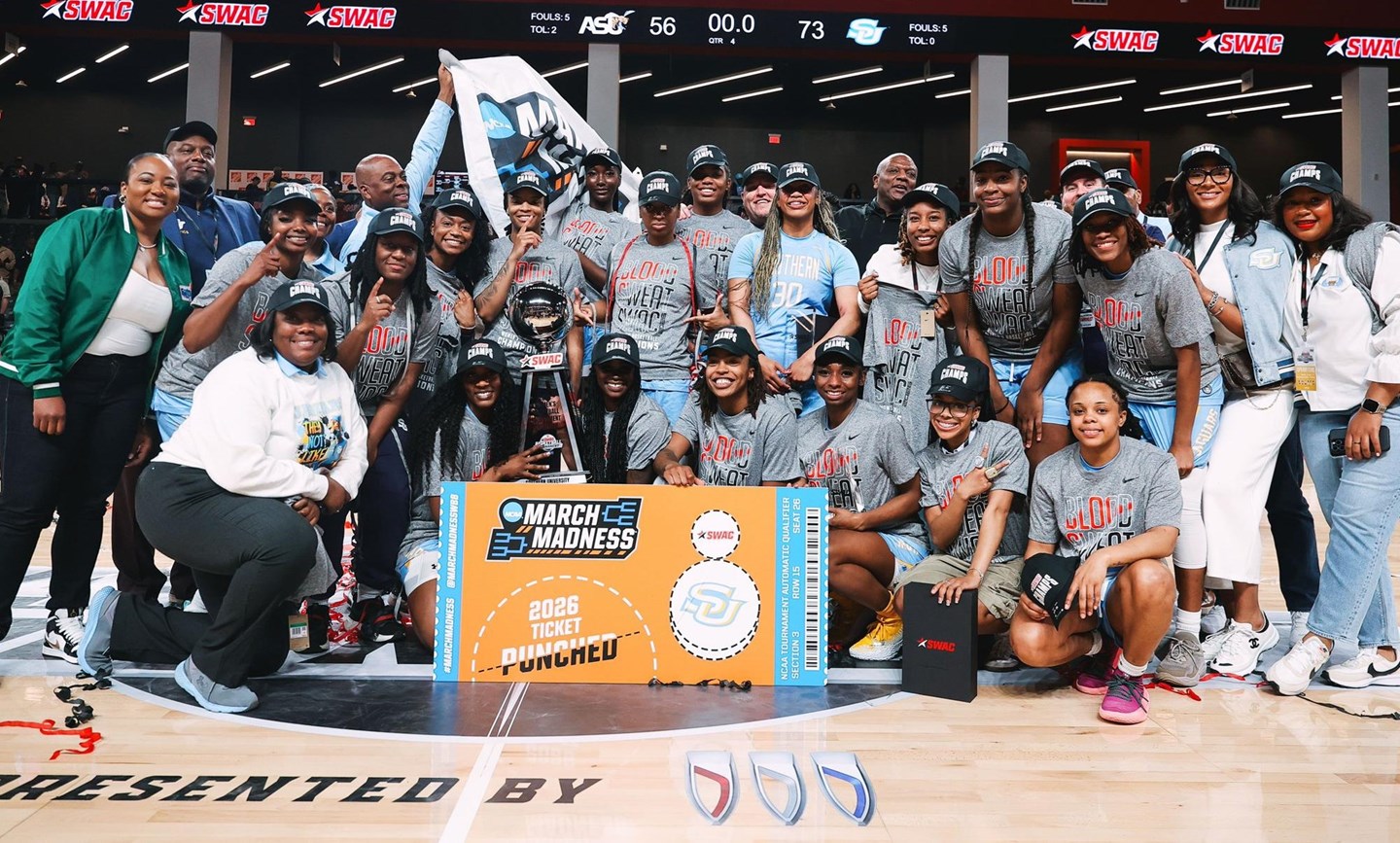
ATLANTA, Ga. — Southern University delivered a dominant performance on both ends of the floor to secure another Southwestern Athletic Conference championship.
The Jaguars defeated Alabama State 73–56 at Gateway Arena to capture the 2026 SWAC Women’s Basketball Tournament title, marking Southern’s fourth tournament championship in the last three seasons and securing back-to-back conference crowns.
Southern controlled the game with efficient offense and a stifling defensive effort that kept the Lady Hornets off balance throughout the contest.
Zaria Hurston led the Jaguars offensively with 13 points, adding three rebounds and a steal. Olivia Delancy contributed 12 points, while D’Shantae Edwards finished with 11 points. Jocelyn Tate added 10 points to round out four Southern players scoring in double figures.
Alabama State was led by Caylee Simpson, who posted a game-high 19 points on 5-of-12 shooting. Shamya Reid added 10 points, two rebounds and a steal for the Lady Hornets.
Southern’s ability to capitalize on opportunities proved to be the difference. The Jaguars scored 32 points in the paint, added 21 fast-break points and turned Alabama State mistakes into 16 points off turnovers.
Defensively, Southern held Alabama State to just 28 percent shooting from the field (17-for-60) while forcing 20 turnovers.
For her standout performances throughout the tournament, Southern’s Jocelyn Tate was named the 2026 SWAC Women’s Basketball Tournament Most Valuable Player.
With the victory, the Jaguars secured an automatic berth in the NCAA Women’s Basketball Tournament, marking the second consecutive year Southern has advanced to the national stage.
2026 SWAC Women’s Basketball All-Tournament Team
Kaila Walker — Alabama A&M
Khaniah Gardner — Arkansas-Pine Bluff
Caylee Simpson — Alabama State
Olivia Delancy — Southern
Jocelyn Tate — Southern (MVP)
-

 Campus2 months ago
Alabama State Lands Major Partnership to Help Build the Future of U.S. Pharmaceutical Manufacturing
-
 Campus2 months ago
Shaw University Divinity School Receives $1 Million Grant to Expand Digital Theological Education Across North Carolina
-

 HBCU ORIGINAL1 month ago
HBCU Football Classics and Homecomings Set the Stage for an Exciting 2026 Season
-

 Campus2 months ago
Morgan State University Launches New Artificial Intelligence Degree Program
-
 Alumni Impact2 months ago
Miles College Electrifies the Field by Welcoming Recent Graduate Daja Gratton as Steaming Flags Instructor
-

 Campus2 months ago
Bowie State Professor and Hip Hop Pioneer MC SHA ROCK to Be Inducted into North Carolina Music Hall of Fame
-

 Campus2 months ago
Southern’s Jacoby Radcliffe Earns MVP as American League Defeats National League in 2026 HBCU Swingman Classic
-
 Campus1 month ago
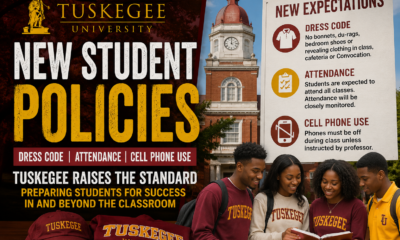
Tuskegee University Introduces New Student Policies Focused on Professionalism and Career Readiness